At 9:18 p.m.
in our house outside Dayton, Ohio, my father slammed me into the hallway wall and told me no one would ever save me.
By 9:46 p.m., according to the paramedic report, my heart had stopped.
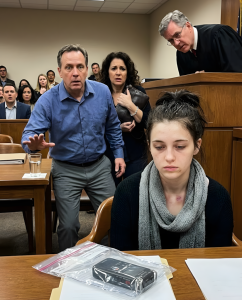
The only reason he did not get to decide the rest of my story was because weeks earlier I had spent thirty-nine dollars on a recorder small enough to fit inside a cold-air vent and had taught myself how to hide evidence better than I had ever learned to hide bruises.
The house smelled the way it always did when Rob had been drinking: whiskey, stale carpet, and burnt coffee he would make and forget.
A yellow lamp beside the couch threw a weak circle of light over the living room, making the stains in the rug look darker.
He stood in that light with his belt looped in one hand, snapping the leather against his palm as if he needed a rhythm to go with his anger.
My mouth filled with the taste of copper.
One rib throbbed every time I inhaled.
Rob was my father on paper.
In practice, he behaved like a man who believed every room he paid for belonged to his temper first.
He controlled the money, the keys, the rules, and the version of every story told outside those walls.
My mother, Linda, moved around him like a person who had forgotten the difference between caution and loyalty.
When he was calm, she called him difficult.
When he was cruel, she called him stressed.
When he was finished, she handed out silence like bandages and expected that to count as care.
I was nineteen that year, and for six months I had been planning to leave.
I had saved $3,800 in an account at a credit union on the other side of town because Rob never banked there.
I kept a backpack behind the water heater in the basement with socks, cash envelopes, a bus ticket to Columbus, my birth certificate, my Social Security card, and copies of old urgent care records.
Maya, my best friend since sophomore year, kept a padded envelope at her apartment with printed medical photos, three earlier recordings, and the password to a cloud folder where I uploaded anything I thought might someday matter in court.
I had not built that folder because I was brave.
I had built it because I was running out of faith that anyone would believe me without it.
That night, Rob found the backpack.
He dragged it upstairs and dumped the contents across the living room carpet as if he were emptying a trash bag.
The bus ticket slid under the coffee table.
One of the cash envelopes split open.
My documents fanned out beside a sock and a charger.
Then the black recorder rolled into the lamp light and stopped near his boot.
He looked at it, then at me.
“You planned this?”
His voice was quiet, and that was always worse.
I didn’t answer.
I kept one hand pressed to my ribs and let the other disappear under the sleeve of my sweatshirt.
My thumb tapped my phone screen twice.
I had set up a shortcut weeks earlier, part panic button, part insurance policy.
It sent a coded message to Maya and triggered.
the backup routine connected to the recorder hidden in the vent behind the couch.
The screen flashed once under my sleeve.
Rob smiled without showing any teeth.
“You walk out that door, you don’t come back alive.”
From the kitchen, my mother whispered, “Rob, stop.”
He turned his head just enough to look at her.
“Go upstairs, Linda.”
She didn’t go upstairs.
She just stepped backward.
I have lived through a belt, a fist, a slammed table edge, and two days in a hospital bed, but I still think the movement that hurt me most that night was that single step back.
It was the moment I understood that she was not frozen.
She was choosing distance.
Rob swung first at the wall beside my face, sending plaster dust over my cheek.
Then he grabbed my hair and yanked me forward.
My shoulder hit the edge of the side table so hard a framed photo toppled over.
The room lurched sideways.
I caught a glimpse of my own reflection in the dark television screen—eyes wide, one sleeve pulled over my hand, body folded around pain like that might make me smaller.
I did not scream for him to stop.
I had done that in earlier years.
It had never helped.
Instead I dropped toward the couch and reached for the leg nearest the floor vent.
Behind it, under a loose screw I had worked free days before, was the recorder he had not found.
My fingers brushed metal.
At 9:31 p.m., it captured him saying, low and steady, “I should have finished this years ago.”
My breath had already started to go ragged by then.
Pain shot through my chest in broken lines.
My lungs felt tight and shallow, every inhale catching halfway in.
At 9:38 p.m., my vision narrowed until the brightest thing in the room was the strip of hallway light under the front door.
In that strip, I saw my mother’s slippers appear, hesitate, and then turn away.
“I can’t breathe,” I heard myself say.
Rob crouched close enough for the whiskey on his breath to sting my eyes.
“Then breathe quieter.”
My hand slid across the carpet until I found the loose vent screw.
With one trembling knuckle, I shoved the recorder deeper into the duct.
It scraped once and disappeared past his reach.
Then everything blurred into lamp glare, the ticking wall clock, the leather in his hand, and the strange soft roaring that comes when your body is trying to stay alive without enough air.
What I didn’t see was Maya reading the word BLUE on her phone across town.
That was our signal.
No explanations.
No calling to check whether I really meant it.
BLUE meant call 911 first, then move.
She did exactly that.
She called emergency services before she put on shoes.
Then she grabbed the padded envelope, my photos, and the notebook where she had written down the cloud login in case my phone was ever destroyed.
She drove toward our house while paramedics were still being dispatched.
The paramedic report said my pulse disappeared at 9:46 p.m.
By then Rob was telling the first lie of the night.
He said I had panicked, collapsed, and hit the floor.
He said I had always been dramatic.
My mother said almost.