Part 1 – She Sent $720,000—Then Heard What Her Mother Really Thought
I was carrying a pie into the dining room when I heard my mother say, “She owes us.
We fed her for eighteen years.”
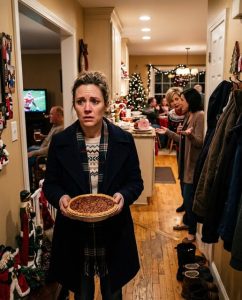
I stopped in the hallway so abruptly the metal pie tin slipped against my palms.
For one blind second, I thought I had misunderstood her.
Maybe she was talking about someone else.
Maybe I had caught the end of a different sentence.
But then my Aunt Sandra gave a small laugh from the kitchen, and my mother answered in that calm, practical tone she used for every conversation she thought was settled.
“She should help,” she said.
“After everything we did.”
The whole house sharpened around me in a way I still remember with painful clarity.
The smell of baked ham and brown sugar glaze.
The football game blaring from the den.
The frosted candles in my mother’s front window.
The rattle of ice in my father’s glass.
My own pulse suddenly so loud I was sure somebody would hear it.
I set the pie on the hallway table before I dropped it.
For fifteen years, I had sent my parents four thousand dollars every month.
Every month.
No skipped transfers.
No excuses.
Not when I was twenty-three and making entry-level money in Boston.
Not when my rent climbed.
Not when I got laid off one spring and spent three months pretending I was fine while paying them from savings and then, when savings ran thin, from credit cards.
I had sent that money with the same regularity other people paid utilities.
It started the year my father hurt his back at the steel plant outside Pittsburgh.
I had just landed my first real job as a paralegal, and I was proud in the fragile way people are proud when they are only one bad month away from disaster.
My mother called me crying so hard I could barely understand her.
My father was off work.
The mortgage was behind.
They were scared.
Could I help just for a little while until the disability paperwork came through?
I said yes before she finished asking.
That first yes rearranged my entire adulthood.
Temporary help became the mortgage.
The mortgage became the roof.
The roof became prescription copays, then insurance deductibles, then property taxes, then a new SUV because the old one was supposedly unsafe, then the kitchen remodel my mother insisted was necessary because the cabinets were “literally falling apart,” which turned out to mean the color looked dated in winter light.
Every year there was another emergency, another practical reason, another conversation designed to make refusal feel cruel.
At first I told myself this was what good daughters did.
Then I told myself I was almost through the hard part.
Then I stopped telling myself anything at all and just kept sending the money.
There are losses that do not look dramatic when they happen.
They look like a winter coat you keep wearing two years too long because your father needs a new medication.
They look like a weekend trip you decline because your mother says the tax bill came in higher than expected.
They look like a relationship ending because when a good man asks why you always seem tense at the end of the month, you smile and say work has been stressful.
instead of admitting that you are bankrolling your parents at the cost of your own future.
I had become skilled at living smaller than my paycheck suggested.
My parents had become skilled at living larger.
So when I heard my mother say I owed her for feeding me, something inside me did not explode.
It froze.
I walked into the dining room smiling.
I passed plates.
I laughed when my father made a joke about the Steelers.
I brought my mother extra gravy.
I asked Sandra if she wanted whipped cream on her pie.
The strangest part of betrayal is how polite you can become while it is still bleeding through you.
I was so calm that night I frightened myself.
At 10:14, I locked the guest room door and opened my banking app.
After rent, minimum payments on the balances I hated looking at, and the holiday flight home, I had $611.83 left.
My next automatic transfer to my parents was scheduled for January first.
I stared at the number for a full minute.
Then I called Claire, my financial adviser.
Claire had spent the previous year asking me hard questions I never answered honestly.
Do your parents know what this is doing to you? What happens if you stop? Why are you the only one carrying this? I always deflected.
My parents needed me.
Families were complicated.
It was temporary.
The lies had become reflexes.
When she picked up, I said, “Stop the transfer.
Shut down the family account.
Effective tonight.”
She was quiet for half a beat.
“Are you sure?”
I looked at the floral wallpaper my mother had chosen a decade earlier during the kitchen update I paid for.
“For the first time in fifteen years,” I said, “I am.”
I slept badly.
The house made all its ordinary noises, and every sound felt accusatory.
The heater kicked on.
Pipes groaned.
Somebody coughed down the hall.
I lay in the bed of my childhood room and thought about what it meant that I had spent half my life trying to earn love from people who had already decided it was billable.
The next morning my mother handed me a shopping list while I was putting on my coat.
“If you get time after your flight, order that air fryer your father wanted.
The good one, not the cheap one.”
She said it without looking at me.
Without asking whether I had a safe flight ahead.
Without noticing that I had barely slept.
That was the moment I understood the arrangement had become invisible to her.
My giving no longer registered as giving.
It had hardened into expectation.
On the plane back to Boston, my phone lit up with a message from her.
Don’t forget January might need to hit early because of the holiday.
Not Can you send it?
Not Are you okay?
Just a reminder.
The kind you send to a service provider.
When I got home, I did not unpack.
I opened my laptop, logged into every account I had, and started pulling records.
Month by month.
Year by year.
Transfer confirmations.
Emergency wires.
Email threads.
Every time my mother had written just this once.
Every time my father had texted that things were tight.
I built a spreadsheet until the numbers stopped feeling.