Amy recognized the folder before I did.
It was the gray house folder Teresa kept on the top shelf of the pantry, the one she used for grocery receipts, Frederick’s appointment papers, and anything she told Amy was too important to lose.
Mason looked from Amy to my mother.
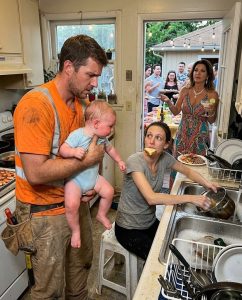
Teresa said, “Connor, this is getting ridiculous. Mason was helping me clean up.”
“She told me to put it in my truck,” Mason said.
My mother stopped talking.
The ambulance crew was already coming through the gate, so I didn’t open the folder on the porch. I carried Frederick to them while Amy climbed into the ambulance beside him.
Before the doors closed, Mason caught my sleeve.
“She said to move it before you started asking questions. I thought it was receipts.”
I hadn’t eaten since early that morning, and my mouth tasted like the coffee I’d been drinking at the construction site. I put the ruined cake box into my trunk for no reason at all, then followed the ambulance to the hospital.
The folder rode on the passenger floor.
At registration, while a nurse took Frederick and Amy through the double doors, I opened it.
Near the front was an after-visit sheet from Frederick’s pediatric appointment the previous afternoon.
Amy had taken him in because the fever had started then.
The instructions were simple: keep him drinking, monitor him closely, and get urgent medical help if his breathing became fast or difficult.
Teresa had initialed the bottom because Amy had asked her to read it before Amy tried to sleep.
My mother had known.
Under that sheet were weeks of receipts Amy had been told to file for Teresa: food, household supplies, liquor, rented party equipment, and charges from places that had nothing to do with keeping our lights on or our son cared for.
I pulled out my phone.
For months, sending Teresa $3,000 had been automatic.
I canceled the next transfer and deleted the recurring payment while I stood beneath the hospital entrance light.
The money stopped that night.
Frederick stayed under observation for most of the night.
The room was cold enough that Amy kept a hospital blanket over her knees, and somebody had left a child’s orange sticker stuck upside down beneath the visitor chair.
A doctor told us Frederick was dehydrated and needed treatment while they watched his breathing and fever.
He was sick.
He was also getting care now.
When Amy finally drank half a paper cup of water, I asked why she hadn’t told me about the appointment.
She stared into the cup.
“I did tell you he was sick.”
I remembered the call.
I had been standing beside a concrete pour with a compressor running behind me. Amy had said Frederick had a fever, and Teresa had immediately come onto the phone saying she had everything handled.
I had told Amy to get some rest.
That was it.
Across the room, a vending machine accepted a dollar from a man in work boots and then refused to give him anything. He pressed the same button three times before walking away.
I asked Amy what else I had missed.
She didn’t answer that question.
“Did you bring his insurance card?”
I hadn’t.
Teresa had it.
The registration desk was able to pull up our information electronically, but that led to something I hadn’t expected.
Teresa’s name was still listed as an authorized caregiver from the paperwork I had completed months earlier so she could take Frederick to routine appointments while I worked.
I had signed that permission myself.
Back then, it had felt practical.
That night, it meant my mother could call a clinic, receive information, schedule routine care, and keep presenting herself as the person responsible for our son because I had given her a legitimate piece of authority and never reviewed it again.
I asked for the authorization to be removed.
Amy looked at me when I said it.
Not gratefully.
Just carefully.
My phone had been vibrating on the windowsill for several minutes.
Teresa was calling.
When I finally answered, her voice was quiet.
“Honey, I know you’re scared. I’m scared too. But shutting me out while Amy is exhausted isn’t helping Frederick.”
I asked why she had kept Amy washing dishes after reading the pediatric instructions.
“She wanted the party to go well.”
Amy turned her face toward the window.
Teresa kept going.
“You weren’t there. You don’t understand how difficult she’s been lately. I have been carrying that house for both of you.”
There it was again.
Care, translated into ownership.
I didn’t argue about Amy.
I asked my mother why Mason had been carrying the folder outside.
For a few seconds, she said nothing.
Then she told me Mason had misunderstood her.
Mason called while she was still speaking.
I let Teresa’s call end and answered him.
He was sitting in his truck outside my house because the officer had told the remaining relatives to collect their things and leave the yard.
Months earlier, Mason had been the person who told me not to make an issue out of Teresa organizing our bills.
“That’s just how she helps,” he’d said.
I had listened.
Now his voice sounded smaller.
“Connor, she didn’t tell me to protect the folder. She told me to get it off the property before you looked through it.”
He agreed to repeat exactly that to the officer before he left.
That changed something.
Until then, Teresa could describe the afternoon as one overwhelmed grandmother, one exhausted mother, and one son who had come home angry and turned a family party into a police call.
Mason had been helping her.
Now he wasn’t.
By morning, Teresa had moved to a different argument.
She stopped talking about the money.
Instead, she started calling relatives and saying Amy was isolating me from my family.
The threat hadn’t become larger.
It had changed shape.
An aunt texted that she understood I was upset but that humiliating my mother in front of everyone was cruel.
Another relative asked whether Amy had “put me up to” canceling the money.
I read the messages while eating crackers from a packet the nurse had handed me sometime before dawn.
Then I turned the phone face down.
Amy didn’t need to defend herself to twenty people who had watched her wash their dishes while holding a feverish baby.
A little later, Frederick woke and reached for her shirt.
She lifted him without looking at me.
When we were discharged, Mason called twice before I answered.
He told me the yard was empty and the rented tables were being collected, but Teresa was still inside the house.
I said I was coming home.
“Maybe don’t,” he said. “Not yet.”
I went anyway.
The backyard smelled like old seafood and wet grass.
One red plastic cup had rolled underneath the hedge, and somebody had left three unopened bottles of water on the folding table.
Inside, Teresa was sitting at the kitchen table.
She had changed out of the dress.
The sink was empty now.
“I suppose you’re proud of yourself,” she said.
I told her Amy and Frederick were staying in the car until I knew what she planned to do.
Teresa folded a paper napkin once, then again.
“This is my home too. I’ve lived here for a year.”
The deed on my phone had ended her claim that she owned or ran the house.
It had not made her disappear.
The officer from the night before had already made clear that he wasn’t going to settle a live-in family arrangement for us at the curb unless someone was in immediate danger.
For the first time since I had opened that hidden HOME folder, I understood the difference between proving ownership and regaining control of a home.
I had won one thing and still couldn’t bring my wife comfortably through the front door.
So I didn’t.