They Blamed Me for Losing the Mansion. Then the Banker Turned the File Around.
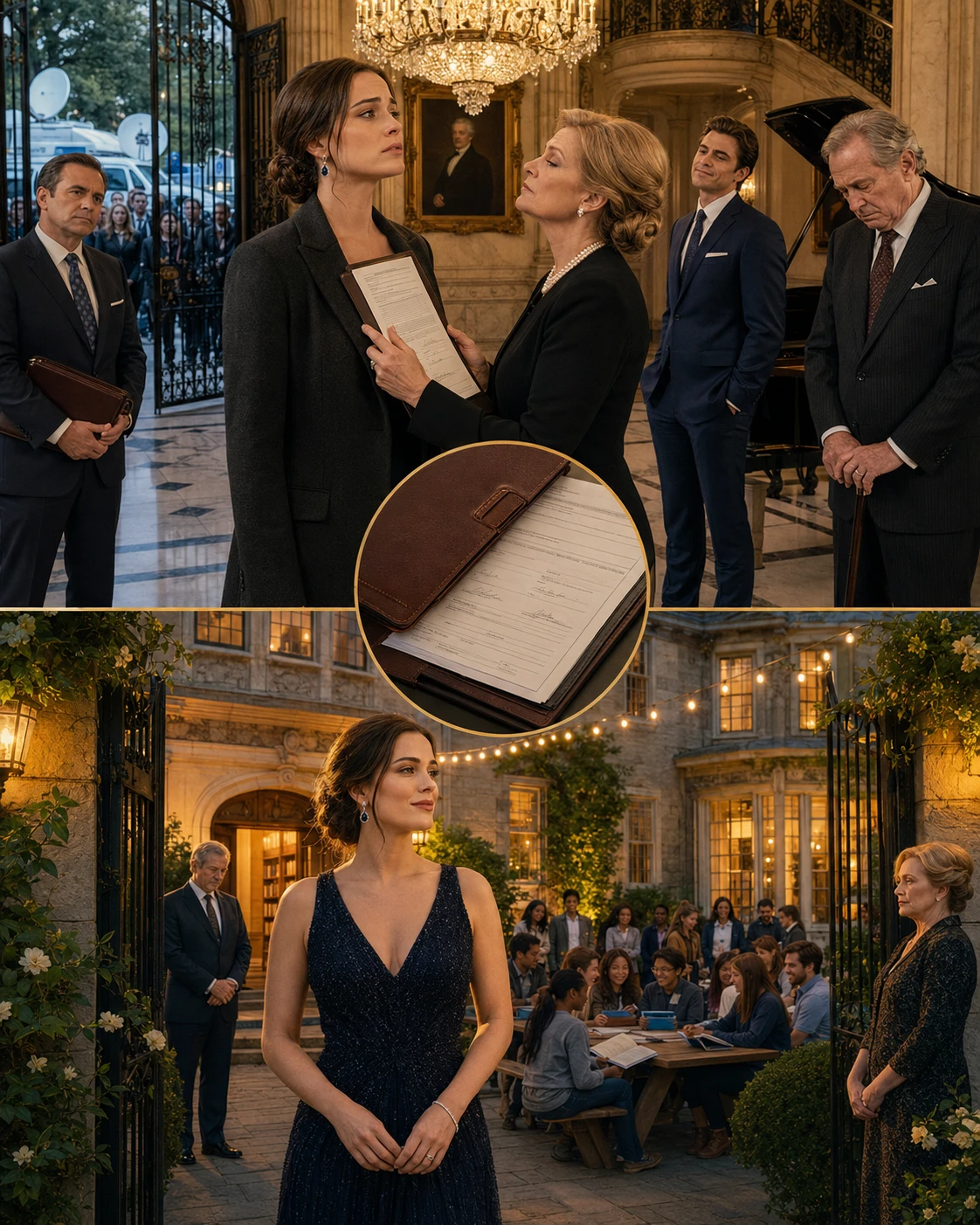
My mother slapped the foreclosure notice against my chest in front of the banker, the neighbors, and half the charity board.
“This is what happens when you abandon your family, Claire,” she said, voice trembling beautifully for an audience.
My father would not look at me.
My brother Austin did—just long enough to smirk.
Then my mother announced, loud enough for the marble foyer to hear, “Your brother tried to save us, and you let us drown.”
The notice was still warm from her hand.
Outside, behind the black iron gates of the Vaughn estate, two news vans idled along the curb like patient vultures. Across the street, Mrs. Whitaker from the Preservation Society pretended to adjust the collar of her cream wool coat while watching every second. Inside the mansion, the chandeliers glittered over the staircase, the same staircase where my mother had once made me stand while she told guests I was “difficult, but useful.”
Useful.
Not loved. Not cherished. Not even misunderstood.
Useful.
Austin stood near the grand piano in a navy suit that cost more than my monthly rent, one hand in his pocket, his expression carefully arranged into grief. He was very good at grief when someone else had to pay for it.
My father leaned on his cane beside him, gray-faced and furious. “You knew we were struggling,” he said to me. “You knew this house was all we had left.”
I looked at the foreclosure notice.
Then I looked at the banker.
Mr. Graham Ellison, senior vice president of Commonwealth Heritage Bank, held a leather loan folder against his chest. He was not smiling. He was not dramatic. He was simply waiting, the way men wait when they have facts in a room full of lies.
I said quietly, “I didn’t take out the loans.”
My mother laughed once. It was sharp enough to cut glass.
“No, Claire. You just disappeared the moment things became hard. Austin stayed. Austin sacrificed. Austin tried to keep this family together.”
Austin lowered his head, like a saint accepting praise he knew he did not deserve.
I felt something old and tired move behind my ribs, but my face stayed calm.
That had always been my only power in this house.
Calm.
When they called me ungrateful.
Calm.
When they used my savings and forgot to say thank you.
Calm.
When they celebrated Austin for doing the things I had done in silence.
Calm.
Mr. Ellison finally opened the leather folder.
The sound of paper shifting echoed through the foyer.
My mother turned toward him with a trembling breath. “Please, Graham. Tell her what she’s done.”
Mr. Ellison removed a stack of documents, placed them on the entry table beneath my grandmother’s portrait, and slid the top page forward.
“I’m afraid,” he said, “the issue is not Claire Vaughn’s absence.”
Austin’s eyes flickered.
My father frowned. “What?”
Mr. Ellison tapped a signature line.
“The issue is these withdrawals from the equity line. Seven of them. Over a period of twenty-two months.” He turned the page around so my parents could see. “Every one of them was authorized by Austin Vaughn.”
For the first time in my life, my brother stopped performing.
The foyer went so silent I could hear the old grandfather clock inhale before it struck noon.
My mother stared at the page.
My father’s hand tightened around his cane.
Austin gave a breathless little laugh. “There’s been a mistake.”
I looked at him then.
Not with anger.
Not with triumph.
Just recognition.
Because I had known for a long time that Austin would eventually burn the house down.
I had only wondered how long my parents would keep blaming me for the smoke.
Chapter 1: The Mansion That Raised a Prince and Buried a Daughter
Vaughn House sat on the oldest hill in Chestnut Hill, Massachusetts, a white stone mansion with black shutters, ivy crawling over the east wing, and a circular driveway that curved around a fountain my grandmother had imported from Italy before I was born.
People in Boston knew our family for three things.
The house.
The charity galas.
And Austin.
Austin Vaughn, the brilliant son. Austin Vaughn, Harvard Business School. Austin Vaughn, the youngest man invited to speak at the Essex Club’s investment luncheon. Austin Vaughn, who smiled like he had been raised under soft lighting and never told no in his life.
I was Claire Vaughn.
The daughter who worked too much.
The daughter who “had a tone.”
The daughter who remembered hospital appointments, mortgage statements, tax deadlines, prescription refills, and which relatives were allergic to shellfish.
The daughter who was somehow never generous enough, even when my generosity kept the lights on.
My earliest memory of Austin was not of him being cruel. It was of him being rewarded.
He was five when he knocked over my mother’s crystal vase in the drawing room. I was seven. The vase shattered across the hardwood floor like ice.
My mother ran in, saw Austin crying, and reached for him first.
Then she looked at me.
“Claire,” she said, before asking a single question, “what did you do?”
Austin learned something that day.
So did I.
He learned that tears worked if they belonged to him.
I learned that truth did not matter unless someone wanted it.
Years passed. Austin grew handsome and charming. I grew responsible and quiet. He forgot homework, and I stayed up helping him finish it. He wrecked my father’s Mercedes at seventeen, and I was blamed for “distracting him” because I had called to ask when he was coming home. He missed my mother’s birthday dinner because he flew to Miami with friends, and I spent the evening arranging flowers, ordering cake, and smiling while she sighed, “At least Austin sent a text.”
I graduated from Boston College with honors.
Austin graduated later, with a degree my parents described as “more entrepreneurial than academic.”
When my grandmother, Evelyn Vaughn, was alive, she was the only person in that house who saw me clearly.
She lived in the west wing after my grandfather died, surrounded by books, old legal papers, and framed photographs of the Vaughn shipping company back when it was still a family empire instead of a memory. She had sharp eyes, red lipstick, and no patience for fools.
“Your mother loves a performance,” she once told me, while I sat beside her bed sorting her medication. “Your father loves peace. Austin loves applause. And you, my dear, have made the dangerous mistake of being useful to people who confuse usefulness with obligation.”
I was twenty-three then, too young to understand that she was trying to warn me.
When my grandmother died, the house changed.
Not physically. The marble stayed polished. The gardeners still came on Tuesdays. My mother still hosted luncheons under the glass conservatory roof, smiling beneath orchids while pretending grief was something that happened tastefully.
But something underneath had loosened.
Grandmother had held the family together with money, discipline, and fear. Once she was gone, my father’s poor investments surfaced. The old family company, Vaughn Heritage Development, had been losing money for years. My mother’s charity reputation was expensive to maintain. Austin had begun calling himself a private equity consultant, which mostly meant he wore Italian shoes to meetings and spoke in phrases nobody challenged because they sounded rich.
By then, I had left the mansion and moved into a small apartment in Back Bay. I worked as a senior financial compliance analyst for a hospital network, which sounded boring to my family until they needed someone to understand a statement, organize tax records, dispute an insurance denial, or stop a creditor from calling during dinner.
Then suddenly my job became very useful.
My father had a minor stroke when I was twenty-eight. My mother became dramatic, Austin became unavailable, and I became the person who learned how to change a wound dressing without flinching.
The first mortgage payment I made was not supposed to become a pattern.
My mother called me on a Thursday evening in November. Rain tapped against my apartment windows. I had just come home from work, still wearing my heels, when her name appeared on my phone.
“Claire,” she said, her voice thin. “Your father can’t know.”
That was how it always began.
Your father can’t know.
Austin meant well.
It’s only temporary.
You’re so good with these things.
The payment was late. The account was short. My father’s medical bills had piled up. Austin was “moving funds around,” my mother said, but the bank needed money by Monday.
I paid it.
Eight thousand four hundred dollars.
My mother cried and said, “I don’t know what we’d do without you.”
Two weeks later, at Thanksgiving dinner, she raised her glass and said, “To Austin, for stepping up as the man of this family.”
He smiled across the candlelit table.
I folded my napkin in my lap and said nothing.
The pattern continued for three years.
Mortgage payments.
Insurance premiums.
Hospital co-pays.
Property taxes.
A private nurse after my father fell in the library.
My mother always called in crisis. Austin always promised something large and vague. I always handled the real number.
And at every public event, Austin received the credit.
At the Essex Club Christmas dinner, my father clapped him on the shoulder and said, “This one has kept us afloat.”
At my mother’s charity auction, she introduced him as “the financial mind saving our family legacy.”
At my cousin’s wedding, Aunt Patricia asked me why I had never “done something impressive like Austin.”
I smiled politely because dignity had become muscle memory.
No one asked why I drove a twelve-year-old Honda while Austin arrived in a leased Aston Martin.
No one asked why I stopped taking vacations.
No one asked why my apartment had secondhand furniture while my mother’s florist bills looked like mortgage payments.
They did not ask because the answer would have disturbed a story they preferred.
Then, on a bright Sunday in April, my mother invited me to brunch at Vaughn House.
That alone should have warned me.
My mother did not invite me to meals. She summoned me to problems.
When I arrived, the dining room had been arranged like a stage. White roses. Silver coffee service. My father at the head of the table. Austin beside him. Aunt Patricia. Uncle Warren. My cousin Julia. Two women from my mother’s foundation board. Even Reverend Cole from St. Matthew’s sat near the window with a cup of tea he looked too nervous to drink.
A family audience.
My mother wore pearls.
Austin wore sympathy.
The foreclosure notice lay beside my plate.
“Claire,” my mother began, “before you say anything defensive, I want you to understand that this is a family intervention.”
I did not sit down.
The notice looked official, heavy, final.
Aunt Patricia pursed her lips. “Your mother has been under unbearable stress.”
My father’s voice came low. “We gave you every advantage.”
I almost laughed. Not because it was funny, but because pain sometimes comes so complete that the body reaches for the wrong sound.
My mother lifted the notice.
“The bank is moving against the house,” she said. “And we know you stopped helping because you wanted to punish us.”
Austin looked down at his hands.
He played humble guilt beautifully.
“I told them not to confront you,” he murmured.
That was the first lie of the morning.
My father slammed his palm on the table, making the china jump.
“Don’t defend her.”
The room turned toward me.
I looked at each face. Relatives who had eaten meals I paid for. Family friends who had toasted Austin with champagne bought on accounts I quietly rescued. A pastor who had once told me honoring parents meant not keeping score.
My mother stood, picked up the notice, crossed the dining room, and pressed it against my chest.
By the time Mr. Ellison arrived from the bank an hour later, the story had already been written.
Claire was selfish.
Claire had abandoned the family.
Claire was jealous of Austin.
Claire was letting the mansion die because she could not stand that she had never been the favorite.
And for a few minutes, they all looked satisfied.
There is a special kind of comfort cruel people take in blaming someone who has never defended herself loudly.
They mistook my silence for weakness.
They never understood that silence can also be preparation.
Chapter 2: Austin’s Perfect Smile Began to Crack
After Mr. Ellison turned the loan file around in the foyer, nobody moved.
My mother stared at Austin’s signature like it had appeared in a language she did not know. Her hand rose to her throat, fingertips resting on pearls my grandmother had left her with very specific instructions not to sell.
Austin recovered first.
Of course he did.
“This is ridiculous,” he said, stepping forward with a soft laugh. “Dad authorized me to handle restructuring. The signatures are standard. Graham knows that.”
Mr. Ellison did not blink. “Your father authorized discussions. He did not authorize seven withdrawals totaling one million, eight hundred and seventy thousand dollars.”
Aunt Patricia made a small choking sound.
My father turned slowly toward Austin.
“What withdrawals?”
Austin’s jaw tightened.
I watched the calculation move across his face. Anger first. Then charm. Then injury.
“Dad,” he said gently, “you were recovering. Mom was overwhelmed. Claire had stopped being reliable.”
I almost admired him.
A lesser liar would have panicked.
Austin built a bridge from fraud to my name in under ten seconds.
My mother seized it like a drowning woman.
“That’s true,” she whispered. “Claire had become so cold.”
Mr. Ellison removed another page.
“These funds were not applied to the mortgage. They were transferred through two business accounts connected to Beacon Strategic Ventures LLC.”
My father’s face drained.
That company belonged to Austin. His private little empire with a brushed gold logo, a riverfront office, and no visible clients.
Austin’s voice sharpened. “You’re making this sound criminal.”
Mr. Ellison’s expression remained professional. “I’m describing bank records.”
“And I’m telling you,” Austin said, “that I moved money to protect family assets. Some of those funds are tied up in investments.”
“What investments?” I asked.
Everyone looked at me as if the furniture had spoken.
Austin gave me the smile he used when he wanted people to think I was unstable.
“Claire, this is complicated.”
“No,” I said. “It’s documented.”
His smile thinned.
My mother turned on me again, desperate to return the room to familiar ground. “This is not the time for your resentment.”
I looked at her.
I had spent years imagining what I would say if she ever chose me over him.
Now I understood that she would not. Not because she lacked information. Because choosing him had become part of who she believed herself to be.
Mr. Ellison closed the folder.
“Mrs. Vaughn, Mr. Vaughn, the bank scheduled this meeting because the arrears are severe and because the loan activity raised internal concerns. Foreclosure proceedings are active. However, there is another matter.”
Austin’s head snapped toward him.
I already knew what was coming.
Three months earlier, I had found the first clue in a property tax notice mailed to my apartment by mistake.
Vaughn House had been placed into the Evelyn Vaughn Family Preservation Trust before my grandmother died. My father had lifetime occupancy rights, but the property itself was protected under conditions. No additional debt could be attached to the house without trustee consent.
The trustee had been my grandmother’s attorney, Henry Caldwell.
When he retired, the successor trustee named in the document was not my father.
Not my mother.
Not Austin.
Me.
My grandmother had told me once that she believed houses could become prisons if handed to the wrong people.
I thought she had meant sentimentally.
She had meant legally.
The bank should never have approved the equity line without trustee authorization. But Austin had presented paperwork stating that I had resigned as successor trustee and that my father, under medical power of attorney, had assigned Austin authority.
My signature was on that paperwork.
Except I had never signed it.
The first time Henry Caldwell showed me the copy in his law office, I had stared at my own name until the letters blurred.
“Claire,” he had said, leaning back in his leather chair, “this is not merely family misconduct. This is a forged trustee resignation.”
I wanted to feel shocked.
Instead I felt exhausted.
Of course Austin had forged my name.
The only surprising thing was that my parents would probably blame me for making him feel he had to.
For twelve weeks, I gathered records.
Quietly.
Payment confirmations from my bank.
Emails from my mother requesting money.
Texts from Austin promising to reimburse me with laughing emojis.
Wire transfers from the equity line to Beacon Strategic.
Copies of the forged trustee resignation.
Security footage from the bank branch showing Austin signing documents in person.
Hospital billing records showing who actually paid my father’s care.
Mortgage statements proving that every payment for thirty-eight months had come from my account.
I did not send angry messages.
I did not confront Austin in the driveway.
I did not beg my parents to believe me.
I had done enough begging as a child without opening my mouth.
Instead, I hired an attorney.
Then I waited.
That Sunday, as Mr. Ellison stood in the foyer under the chandelier and my family looked from Austin to me, I felt the strange calm that arrives when grief finally becomes evidence.
My father’s voice cracked.
“Austin,” he said. “Tell me this is not true.”
Austin looked wounded. “Dad.”
“Tell me.”
“It’s not that simple.”
Those four words changed the room.
My mother backed into the entry table, rattling a silver frame. Aunt Patricia sank into a chair. Uncle Warren whispered something under his breath that sounded almost like a prayer.
I held the foreclosure notice in both hands.
Then I placed it neatly on the table.
“I have a meeting at Caldwell, Pierce & Lowe tomorrow morning,” I said. “Ten o’clock. Everyone named in the trust has been notified.”
Austin’s eyes narrowed.
My mother looked at me with fresh anger because fear needed somewhere familiar to go.
“You arranged this?”
“No,” I said. “Austin arranged it when he forged my name.”
The words landed cleanly.
Not shouted.
Not sharpened.
Just placed in the room like a blade on white linen.
Austin’s face reddened. “You have no idea what you’re talking about.”
“I do.”
“You’re trying to ruin me because Mom and Dad trusted me.”
“I’m trying to stop you from ruining them.”
His laugh came too loud. “That’s rich. You left.”
I stepped closer, lowering my voice so only those near the foyer could hear, which somehow made it worse.
“I left the house, Austin. I never left the bills.”
For a second, his expression cracked completely.
There he was. Not the genius. Not the prince. Just a spoiled boy caught with matches in a room full of gasoline.
Then my mother said the thing that finally ended something in me.
“Even if Austin made mistakes,” she whispered, “he was here. He loves us. You have always acted like helping this family was a burden.”
I looked at her pearls, her perfect hair, her trembling mouth.
I remembered being thirteen and missing a school trip because Austin needed a new lacrosse camp.
I remembered being twenty and giving my father my summer internship money to cover Austin’s credit card debt because “boys make mistakes.”
I remembered sitting beside my grandmother’s hospital bed while Austin posted vacation photos from Aspen and my mother told guests he was “processing grief privately.”
I remembered every small death inside me that they had called duty.
Then I nodded once.
“You’re right,” I said.
My mother blinked.
“Helping people who punish you for saving them is a burden.”
No one spoke.
I picked up my coat from the bench.
Austin tried one last time. “Claire, don’t be dramatic.”
That almost made me smile.
“I’m not being dramatic,” I said. “I’m being done.”
I walked out through the front doors of Vaughn House with the same posture my grandmother had taught me when I was sixteen.
Shoulders relaxed.
Chin level.
No running from people who deserved to watch you leave.
Behind me, my mother called my name.
For once, I did not turn around.
Chapter 3: The Documents My Family Never Expected Me to Keep
Caldwell, Pierce & Lowe occupied the twenty-third floor of a glass tower overlooking Boston Harbor. The lobby smelled like polished wood, expensive coffee, and consequences.
My family arrived separately.
My parents came first, my mother wearing black as if attending a funeral for her reputation. My father moved slowly with his cane, older than he had looked the day before. Austin arrived last in a charcoal suit, carrying no folder, no notes, no visible fear.
That was his greatest talent.
He could enter a room already guilty and make everyone feel rude for noticing.
Henry Caldwell sat at the head of the conference table, silver-haired, narrow-eyed, and elegant in the old Boston way. Beside him was my attorney, Naomi Brooks, who had once been a federal prosecutor and still had the calm of someone who could dismantle a lie with a paperclip.
Mr. Ellison from the bank sat across from us with two compliance officers.
This was not a family meeting.
It was a legal one.
My mother looked offended by that distinction.
“Before we begin,” she said, “I want it stated that this family has always handled matters privately.”
Naomi looked up from her tablet.
“Then your son should not have created bank records.”
Austin’s lips pressed together.
Henry Caldwell cleared his throat.
“The purpose of this meeting is to address unauthorized debt attached to Vaughn House, potential trust violations, and possible financial fraud connected to the Evelyn Vaughn Family Preservation Trust.”
My mother flinched at the word fraud.
My father looked at the table.
Austin leaned back.
“Potential,” he said. “That word is doing a lot of work.”
Naomi opened a folder.
“Not as much work as your signature.”
The first document appeared on the conference screen.
A trustee resignation form dated two years earlier.
My name at the bottom.
Claire Elise Vaughn.
My mother squinted. “That’s Claire’s signature.”
“No,” Naomi said. “It is an imitation of Claire’s signature.”
Austin laughed under his breath. “Based on what?”
Naomi changed the screen.
A handwriting analyst report.
Then another image appeared. Bank security footage from Commonwealth Heritage, timestamped on a Tuesday afternoon. Austin sat at a banker’s desk. He signed a document. He slid it back.
My mother’s hand covered her mouth.
Austin sat up. “That proves nothing.”
Mr. Ellison spoke. “The original wet-ink document was retrieved from our secured records. It matches the document shown in the footage.”
Naomi clicked again.
A second video.
Austin at the same branch.
Another signing.
Then a third.
Then a scan of his driver’s license attached to the loan file.
The room shrank around him.
My father turned his head slowly. “Austin.”
Austin’s face had gone hard now, all softness gone. “Dad, I did what I had to do. The house was underwater. The company was dying. Claire was sitting on trustee authority she didn’t earn.”
There it was.
Not denial.
Entitlement.
My mother dropped her hand. “Austin, what does that mean?”
“It means Grandma put Claire in charge to punish all of us,” he snapped. “You know how she was. She never trusted anyone.”
“She trusted Claire,” Henry said.
Austin glared at him.
Henry did not look away.
“The trust was explicit,” Henry continued. “Vaughn House could not be leveraged for business speculation. It was to remain a residence and protected family asset during Richard’s lifetime, then pass according to the trust distribution terms.”
My father’s voice was rough. “What distribution terms?”
The room shifted again.
My mother looked at Henry.
Austin looked at me.
I had read the trust three times, each time with a different kind of heartbreak.
Henry removed his glasses.
“Upon Richard Vaughn’s death, or upon termination of occupancy due to financial misconduct, the property transfers to Claire Vaughn as primary beneficiary, with preservation restrictions. Austin Vaughn was granted a separate investment trust, fully funded at the time of Evelyn Vaughn’s death.”
My mother whispered, “Separate?”
Naomi clicked again.
A trust disbursement summary.
Austin’s name.
Two million dollars.
Distributed over eight years.
My father stared.
“I thought that money was for business development.”
Austin said nothing.
My mother turned to him. “You told us your grandmother cut you out.”
Austin rubbed his jaw.
“She might as well have. Claire got the house.”
“I got responsibility,” I said.
My voice was quiet, but the room heard it.
Austin’s eyes flashed. “You always do that.”
“What?”
“Act noble. Act like you’re suffering because you’re better than everyone.”
“I was suffering because I was paying your debts.”
Naomi placed another packet on the table.
Bank statements.
My bank statements.
For years, I had been ashamed of them. Ashamed that I had let my account be drained by people who still called me selfish. Ashamed that I had eaten cereal for dinner while my mother hosted donor luncheons. Ashamed that I had answered emergency calls at midnight and still showed up to work the next morning.
Now the shame belonged elsewhere.
Naomi did not dramatize it. She simply read the numbers.
“Thirty-eight mortgage payments made by Claire Vaughn. Total: three hundred and sixteen thousand dollars. Property tax payments: eighty-seven thousand. Insurance premiums: forty-two thousand. Medical bills for Richard Vaughn: one hundred and nine thousand. Private nursing invoices: fifty-six thousand. Emergency roof repair: twenty-eight thousand. Legal fees for prior creditor negotiation: eighteen thousand.”
My mother’s face crumpled.
“No,” she said.
Naomi looked at her. “These payments are documented by ACH confirmations, wire records, invoice receipts, and email requests from you.”
My mother’s eyes filled.
Not with apology.
Not yet.
With the horror of being unable to deny the math.
My father reached for one of the statements with a trembling hand.
I remembered him two years earlier, sitting in his leather chair by the library fire, telling me Austin had “a provider’s instinct.”
That same week, I had transferred twelve thousand dollars to stop the bank from issuing a default letter.
He looked at the page now as if numbers could accuse him personally.
They could.
Austin stood abruptly.
“This is absurd. You’re all acting like Claire is some martyr. She chose to help.”
Naomi’s voice stayed flat. “Your sister chose to prevent foreclosure. You chose to create unauthorized debt.”
“I was investing.”
“In what?”
Austin hesitated.
Naomi clicked.
A spreadsheet appeared.
Wire transfers from Beacon Strategic Ventures to a luxury car lease, a Miami condo rental, high-risk cryptocurrency platforms, private club dues, and payments to a failed restaurant investment in the Seaport.
My mother made a sound like something tearing.
Austin pointed at the screen. “Those were business expenses.”
Mr. Ellison said, “The bank’s concern is that loan proceeds were obtained through forged trust documents and used outside the approved purpose.”
“Everybody does that,” Austin snapped.
No one moved.
That was the moment even my mother could not protect him quickly enough.
My father lowered his head.
Henry looked at Austin with a sadness that had no softness in it.
“Austin,” he said, “your grandmother left you enough money to build a stable life. She left Claire the burden of protecting the house because she knew you would sell the bones if someone applauded you for it.”
Austin’s face twisted.
“She hated me.”
“No,” Henry said. “She understood you.”
The room went silent again.
My mother turned toward me slowly.
“Claire,” she whispered, “why didn’t you tell us?”
There are questions that sound like apology but are actually another accusation.
Why didn’t you tell us?
Why didn’t you make us see?
Why didn’t you save us more loudly?
I folded my hands on the table.
“I did tell you.”
She shook her head, crying now. “No.”
“I told you Austin’s business didn’t make sense. You told me I was jealous. I told you the payments were coming from my account. You told me not to embarrass him. I told Dad the company debt was dangerous. He told me I didn’t understand risk. I sent emails. I sent spreadsheets. I asked for family meetings. You canceled them whenever Austin said he was busy.”
My father closed his eyes.
I continued, still calm.
“The problem wasn’t that I didn’t tell you. The problem was that believing me would have required you to admit you had spent thirty years choosing the wrong story.”
Austin scoffed, but it had no strength.
Naomi slid the last packet forward.
“This matter is being referred for civil action. Depending on the bank’s internal review and law enforcement findings, there may also be criminal exposure related to forgery and bank fraud. For now, the immediate issue is control of the trust property and the foreclosure proceeding.”
My mother looked up quickly. “Can we still save the house?”
There it was.
Even now.
Not Claire, are you okay?
Not Claire, how did you carry this?
Not Claire, I am sorry.
Can we still save the house?
I felt the final thread inside me snap so quietly no one else heard it.
Naomi answered for me.
“Claire has legal standing as successor trustee and primary beneficiary. She also has documented personal payments preserving the property. We will be petitioning the court to invalidate the unauthorized loan instruments attached to the trust, halt foreclosure against the protected property, and seek damages from Austin Vaughn and associated entities.”
My father looked at me.
“You can stop the foreclosure?”
“I can fight it,” I said. “And I will.”
My mother reached for my hand.
I moved it before she touched me.
The movement was small.
Its meaning was not.
She stared at the space between us.
“Claire,” she breathed.
I looked at her with all the love I had once tried to earn sitting like a stone in my chest.
“I am not doing this for you anymore,” I said. “I am doing it because Grandma trusted me to protect what she built. And because I’m done letting Austin turn my silence into his cover.”
Austin laughed bitterly.
“You think this makes you powerful?”
“No,” I said. “It makes me free.”
Chapter 4: The Gala Where the Golden Son Lost His Crown
My mother should have canceled the Founder’s Gala.
Everyone told her to.
The bank investigation had begun moving through Boston’s quiet wealthy circles like smoke under a door. No one said the word scandal directly, because people with money prefer euphemisms until handcuffs appear. They called it “the Vaughn situation.” They called it “a misunderstanding.” They called it “family complexity.”
My mother called it “a difficult season.”
Still, she refused to cancel.
The Evelyn Vaughn Literacy Foundation gala had been held every May for eighteen years in the ballroom of the Copley Meridian Hotel. My grandmother had started the foundation to fund reading programs in public schools across Massachusetts. After she died, my mother took over the social side. Luncheons. Plaques. Floral arrangements. Photographers. Her name in embossed programs.
I handled the audits quietly for years because nonprofit compliance mattered and my mother found IRS forms “depressing.”
Austin, naturally, gave the keynote every year.
He spoke about legacy.
He loved that word. Legacy sounded better than inheritance and cleaner than entitlement.
Three days before the gala, my mother called me fourteen times.
I answered on the fifteenth because Naomi advised me to document everything.
“Claire,” she said, voice fragile. “You need to come Saturday.”
“No.”
“You are still part of this family.”
“I was part of this family when you accused me of destroying it.”
She inhaled sharply. “I was upset.”
“You were public.”
A pause.
Then the familiar shift.
“Austin is struggling. Your father is barely sleeping. People are talking. It would mean so much if we could show unity.”
Unity.
Another beautiful word people used when they wanted the injured person to stand beside the knife.
“I won’t stand on stage for Austin,” I said.
“He is still your brother.”
“And I am still the person he stole from.”
“He made mistakes.”
“He forged my signature.”
My mother began to cry.
Years ago, that sound would have moved me across cities.
Now I let it exist without obeying it.
After a moment, she whispered, “Your grandmother would want us together.”
That was the wrong door to open.
“My grandmother put everything in writing because she knew you would say that.”
I ended the call.
On Saturday evening, I went to the gala anyway.
Not because my mother asked.
Because Naomi had received confirmation that Austin intended to announce a “family restructuring plan” from the stage. His attorney had floated a proposal: if I signed temporary management authority back to my father, Austin would help negotiate with the bank and avoid “unnecessary legal ugliness.”
In other words, he wanted me to hand him the match after catching him with the fire.
The ballroom glowed when I arrived. Gold light washed over cream walls. Tall arrangements of white hydrangeas and blue delphiniums stood on every table. Women in silk gowns leaned close over champagne. Men in tuxedos spoke in low voices about markets, schools, and other people’s failures.
At the front of the room, a large screen displayed a black-and-white photograph of my grandmother.
Evelyn Vaughn, 1948–2019.
A Legacy of Literacy. A Family of Service.
I nearly turned around at that.
Then I saw Austin near the stage, laughing with a group of donors.
He looked perfect.
He always looked perfect in rooms where no one had seen the receipts.
My mother spotted me first.
Her face changed—relief, panic, calculation, guilt. She crossed the ballroom quickly, careful not to run.
“Claire,” she whispered. “Thank God.”
I wore a simple black gown and my grandmother’s sapphire earrings. Not the biggest ones. The ones she had left me in a small velvet box with a note that said, For the day you need to remember you were never small.
My mother noticed them.
Her mouth trembled.
“She gave you those?”
“Yes.”
Something like pain passed through her expression, but the program director called her name before she could speak.
My father sat at the front table, looking hollow. He tried to stand when he saw me. I shook my head once, and he remained seated.
Austin approached with a glass of sparkling water and a smile meant for witnesses.
“Claire,” he said warmly. “I’m glad you came.”
“I’m sure.”
His smile held. “Whatever you think of me, tonight is about Grandma.”
“Then you should be careful what you say.”
His eyes cooled.
“There’s still time to stop all this,” he said under his breath. “You’re embarrassing the family.”
I looked around the ballroom—the donors, the relatives, the board members, the old Boston families who had watched my mother humiliate me in drawing rooms for years with polite smiles.
“No,” I said. “I think the family has been embarrassing itself for a long time.”
He leaned closer.
“You always wanted this. To prove you were better.”
“I wanted a family.”
That shut him up for half a second.
Then his mouth twisted.
“You wanted control.”
I smiled faintly.
“No, Austin. Control is what people grab when they know they can’t earn trust.”
The lights dimmed before he could answer.
Dinner began. Speeches followed.
My mother gave a beautiful welcome. Her voice shook when she mentioned my grandmother. People dabbed their eyes. She spoke of service, sacrifice, and family duty.
Each word landed on me like ash.
Then Austin walked onto the stage.
Applause filled the ballroom.
He stood behind the podium beneath my grandmother’s photograph and waited for the room to quiet. He had always understood the value of a pause.
“My grandmother believed,” he began, “that legacy is not what we inherit. It is what we protect.”
Naomi sat two tables behind me. Henry Caldwell sat beside her. Mr. Ellison was not present, but his signed affidavit was.
Austin continued, voice rich and confident.
“Recently, my family has faced rumors. Painful rumors. Public rumors. And while I won’t dignify gossip, I will say this: families survive when they refuse to let bitterness divide them.”
A murmur moved through the room.
My mother stared down at her plate.
My father gripped his cane.
Austin looked directly at me.
“My sister Claire and I have not always agreed. She has chosen a different path. A more independent path. But tonight, I ask her to remember that no legal document matters more than blood.”
The room turned.
Every table.
Every face.
There it was.
The public stage.
The pressure.
The old trap polished for wealthy people in evening wear.
Austin lifted a hand toward me.
“Claire, will you stand with us tonight and show this community that the Vaughn family remains united?”
Applause began cautiously.
My mother looked at me with pleading eyes.
Aunt Patricia nodded as if encouraging a stubborn child to behave.
The photographer near the stage raised his camera.
I stood.
The applause grew.
Austin smiled.
He thought he had won because he still believed dignity meant obedience.
I walked toward the stage slowly.
Not hurried. Not shaking. Not angry.
The room watched the scapegoat return to her place.
At least that was what they thought they were watching.
Austin stepped aside slightly, offering me the podium with theatrical grace.
I reached into my clutch and removed a folded page.
His smile faded.
I placed the paper on the podium and adjusted the microphone.
“Good evening,” I said.
The ballroom quieted.
“My brother is right about one thing. Our grandmother believed legacy was what we protect.”
My voice sounded steadier than I felt, but I had learned long ago that courage often arrives after the body has given up waiting for fear to leave.
“She also believed protection required truth.”
Austin moved beside me.
“Claire,” he said softly, still smiling for the audience.
I turned one page.
“For the last three years, many people in this room have heard that my brother Austin saved Vaughn House. You have heard he stabilized our family finances. You have heard I was distant, jealous, and unwilling to help.”
My mother closed her eyes.
The room went still.
“I did not come tonight to argue with gossip. I came because this foundation bears my grandmother’s name, and I will not allow her legacy to be used as a shield for fraud.”
A sharp collective inhale traveled through the ballroom.
Austin grabbed the edge of the podium.
“Stop.”
I looked at him.
One word.
Calm.
“No.”
Naomi stood at the back of the room.
The hotel technician, already instructed by court-approved counsel representing the trust, changed the screen.
My grandmother’s photograph disappeared.
A bank record appeared.
Gasps rose from the front tables.
Austin turned white.
I did not look at the screen. I knew every line.
“This is a Commonwealth Heritage Bank equity withdrawal authorization dated February 18. The signature authorizing the withdrawal belongs to Austin Vaughn.”
The slide changed.
“March 30. Austin Vaughn.”
Another.
“June 12. Austin Vaughn.”
Another.
“August 9. Austin Vaughn.”
The ballroom had become so silent the air conditioning sounded violent.
Austin stepped away from me as if distance could save him.
“That’s confidential financial information,” he snapped.
Naomi’s voice rang from the floor.
“It is trust evidence being presented to foundation counsel and affected donors after Mr. Vaughn invoked the matter publicly.”
Several heads turned toward her.
People love drama.
But wealthy people love legal phrasing even more.
The slide changed again.
A trustee resignation bearing my forged signature.
Beside it, the bank security still of Austin signing.
My mother made a broken sound at the front table.
I continued.
“This document claimed I resigned as successor trustee of the Evelyn Vaughn Family Preservation Trust. I did not. A handwriting analyst has identified my signature as forged. Security footage confirms Austin Vaughn presented the document.”
Austin’s voice cracked with rage.
“You vindictive little—”
He stopped because every camera in the room was on him.
There it was.
The golden son’s first public mistake.
Not the fraud.
Not the theft.
The loss of charm.
I looked at him, and for one clear second, I saw the boy from the drawing room standing over broken crystal, waiting for me to be blamed.
Only this time, there were cameras.
The slide changed.
Payment records.
My payment records.
“This is the mortgage history for Vaughn House over the last thirty-eight months. Every highlighted payment came from my personal account. Not Austin’s. Mine.”
The room remained frozen.
The slide changed again.
Medical bills.
“My father’s post-stroke care.”
Another.
Property taxes.
“Estate taxes.”
Another.
Insurance premiums.
“Homeowners insurance.”
Another.
Emergency repairs.
“Roof stabilization after the winter storm.”
I looked at my mother.
She was crying openly now, makeup shining under the ballroom lights.
“For years, my parents told people Austin carried this family. That was never true.”
My father bowed his head.
His shoulders shook once.
I almost looked away.
Almost.
But I had spent too many years softening the consequences of their choices.
I owed myself the truth witnessed.
Austin pointed at me.
“You think paying some bills gives you the right to destroy us?”
“No,” I said. “Your choices did that.”
He laughed wildly. “You’re nothing without this family.”
The words echoed.
There were hundreds of people in the ballroom.
Board members.
Donors.
Relatives.
Lawyers.
Bankers.
Family friends.
People who had watched me be dismissed in softer ways for years.
I leaned toward the microphone.
“Then watch me leave it.”
No one breathed.
Naomi walked to the stage and handed me a final document.
I unfolded it.
“This morning, the Suffolk County Probate and Family Court granted emergency trustee authority confirming my position over the Evelyn Vaughn Family Preservation Trust. Unauthorized debt proceedings are being challenged. Austin Vaughn has been removed from all foundation financial access pending investigation. Vaughn House is no longer under my parents’ private financial control.”
My mother looked up sharply.
“What does that mean?”
I turned from the microphone and answered her directly.
“It means Austin can’t borrow against it. You can’t use it as collateral to protect him. And I will not be writing another check to maintain a lifestyle built on lying about me.”
The ballroom did not move.
My mother whispered, “Claire, please.”
That word had lived in my phone for years.
Please pay this.
Please understand.
Please don’t upset your brother.
Please be the bigger person.
Please save us and stay small while doing it.
I held her gaze.
“No.”
Austin lunged a half step toward Naomi, not violent enough to be touched, but desperate enough that two hotel security guards moved closer.
“This is illegal,” he shouted. “She’s humiliating us!”
Henry Caldwell stood slowly from his table.
His old voice carried cleanly.
“No, Austin. She is correcting the record.”
And then Mr. Ellison’s affidavit appeared on screen.
At the bottom was his statement, signed and notarized.
I read only the final line aloud.
“The daughter you blamed was the only one making payments.”
My mother covered her face.
My father wept silently.
Austin stood beneath the ballroom lights with no applause, no protection, no charming explanation left.
For once, the family looked at him and saw what I had seen all along.
Not a genius.
Not a savior.
A man who had mistaken favoritism for immunity.
I stepped away from the podium.
No bow.
No final insult.
No raised voice.
Just the quiet withdrawal of a woman who had finally stopped holding up a room determined to collapse.
Chapter 5: When Regret Finally Arrived, I Did Not Open the Door All the Way
The video spread by midnight.
Not because I posted it.
I did not need to.
Someone at table twelve uploaded a thirty-eight-second clip to Facebook with the caption: Boston golden boy exposed at charity gala by sister with receipts.
By morning, it had crossed platforms.
By noon, my phone had more messages than I could count.
Some were apologies.
Some were gossip.
Some were from cousins who had watched me be humiliated for years and now wanted to say they “always suspected something.”
Aunt Patricia sent three paragraphs beginning with, I hope you know I was only acting on the information I had.
I deleted it.
Information had never been the problem.
Cowardice had.
The legal process unfolded with less drama than the internet wanted but more consequences than Austin expected.
Commonwealth Heritage Bank froze accounts connected to Beacon Strategic Ventures. The forged trustee resignation became central to the civil case. Austin’s attorney tried to argue that he had acted under implied family authority, but implied authority did not explain my forged signature, the bank footage, or the transfers to personal luxuries.
The foundation board voted unanimously to remove him from all positions.
Donors demanded an independent audit.
My mother resigned as chair “to focus on family healing,” which was a phrase drafted by a public relations consultant and understood by everyone as a retreat.
My father moved temporarily into a rehabilitation apartment near his doctors.
Vaughn House, for the first time in my life, went quiet.
I walked through it two weeks after the gala with Naomi, Henry, and a preservation appraiser. Dust floated in the sunbeams above covered furniture. The grand piano was closed. The dining room smelled faintly of lilies from arrangements my mother had abandoned after the scandal.
In the west wing, my grandmother’s room remained almost untouched.
Her books.
Her desk.
Her silver letter opener.
A photograph of her standing in front of the mansion when she was thirty-five, looking fierce and bored with the world’s nonsense.
I sat at her desk and finally cried.
Not loudly.
Not beautifully.
Just enough to let my body admit what my face had refused.
I did not cry because I missed the family I lost.
I cried because I had spent so many years trying to earn a family that had never existed the way I needed it to.
A week later, my father asked to see me.
Naomi advised a public place.
I chose a quiet table near the window at the Boston Public Library café, because neutral ground matters when someone has spent your whole life acting like love is a courtroom where you are always the defendant.
He arrived ten minutes early.
That alone told me things had changed.
My father had never waited for me before.
He looked smaller in a navy sweater, his cane hooked over the chair, his hands folded around a paper cup of coffee he did not drink.
“Claire,” he said when I sat down.
“Dad.”
For a while, neither of us spoke.
Outside, students crossed the courtyard with backpacks and iced coffees. Life continued with unbearable casualness.
He cleared his throat.
“I watched the full video.”
I looked at him. “So did half the country.”
He winced.
“I deserved that.”
I said nothing.
He rubbed his thumb along the coffee lid.
“I have been trying to remember when I stopped seeing you clearly.”
The old Claire would have helped him.
She would have said, It’s okay.
She would have rushed to comfort him because his regret was uncomfortable and my job had always been to remove discomfort from the room.
I let him sit with it.
He swallowed.
“I think maybe I never did. Not the way my mother did.”
At the mention of my grandmother, my throat tightened.
“She tried to tell me,” he said. “Before she died. She told me Austin was charming because we made charm profitable. She told me you were tired. I thought she was being hard on us.”
“She was being accurate.”
“Yes.”
A long pause.
Then his eyes filled.
“I am sorry, Claire.”
The words were small.
Too small for the years behind them.
But they were real.
“I am sorry I praised him with your work. I am sorry I let your mother make you responsible for our peace. I am sorry I called you cold when you were exhausted. I am sorry I let Austin become the son he became because it was easier than parenting him.”
I looked down at my hands.
I wanted those words at sixteen.
At twenty-three.
At twenty-eight.
At thirty-two, sitting in a library café with legal boundaries and a public scandal behind us, they arrived as late flowers on a grave.
Beautiful, maybe.
But they did not resurrect what had died.
“Thank you for saying that,” I said.
He waited.
I did not give him more.
Finally, he asked, “Is there any chance we can be a family again?”
There it was.
The question people ask after burning down a house you spent years trying to save.
I looked through the window at the library steps.
“We can be something honest,” I said. “But not what we were.”
He nodded slowly, tears sliding down his face.
“I don’t know how to do that.”
“I know,” I said. “That’s why I’m not handing you my life while you learn.”
My mother asked to see me three days later.
I met her at St. Matthew’s after morning service, not during, because I refused to make reconciliation another performance.
She sat alone in a pew near the back, wearing a gray coat and no pearls.
For a moment, she looked like a woman I might have known if motherhood had not been so tangled with image.
“Claire,” she whispered.
I sat at the opposite end of the pew.
Not close enough to be pulled into her grief.
Not so far that I was cruel.
She held a tissue in both hands.
“I keep thinking about that day in the foyer.”
I looked at the altar.
“I think about a lot of days.”
Her mouth trembled.
“I believed him because I wanted to.”
That was the first honest thing she had said.
“He made me feel like a good mother,” she continued. “You made me feel… judged.”
“I was a child.”
“I know.”
“No,” I said gently. “I don’t think you do. I think when I became competent, you stopped remembering I had ever been a child.”
She covered her mouth.
The church was empty except for an old woman lighting candles near the side aisle.
My mother’s shoulders shook.
“I don’t know how to ask forgiveness for that.”
“You can start by not asking me to make you feel better.”
She looked at me, startled.
I had never spoken to her like that before.
Not cruelly.
Clearly.
“I am sorry,” she said.
I nodded.
“I believe you.”
Hope entered her face too quickly.
I had to close the door before she mistook a crack for an invitation to move back in.
“But I’m not ready for dinners. I’m not ready for holidays. I’m not ready to be your emergency contact, your financial backup, your emotional translator, or the person who helps everyone pretend this was one bad year instead of a lifetime.”
Her tears spilled over.
“I miss you.”
The words hurt.
Because part of me still wanted them.
Part of me would always be the little girl on the staircase waiting for her mother to ask if she had been cut by the broken crystal too.
“I miss who I tried to be for you,” I said. “But I don’t miss being her.”
My mother bowed her head.
This time, I let her cry without turning myself into comfort.
Austin did not apologize.
Not at first.
He sent messages through other people. He sent accusations through attorneys. He claimed stress, pressure, misunderstanding, family dysfunction, and selective memory. He told one cousin I had “always been unstable.” That cousin sent me screenshots.
I forwarded them to Naomi.
Boundaries are easier when they come with legal counsel.
Eventually, Austin took a plea arrangement on lesser charges tied to fraudulent documents and financial misrepresentation. The civil settlement stripped him of any claim against the trust property and required partial restitution from liquidated assets.
The Aston Martin disappeared.
The Seaport office closed.
Beacon Strategic Ventures became an empty website with a disconnected phone number.
For years, Austin had lived like gravity was for other people.
Then the ground introduced itself.
I did not attend his sentencing hearing.
I read the summary later in Naomi’s office. Probation. Restitution. Community service. Financial restrictions. Enough consequence to bruise his pride. Not enough to heal what he had broken.
Naomi watched me fold the paper.
“Are you disappointed?”
I thought about it.
“No,” I said. “I stopped expecting courts to fix childhood.”
She smiled faintly.
“Healthy answer.”
Vaughn House remained mine to manage under the trust.
For months, I did not know what to do with it.
Every room held a version of me I had outgrown.
The dining room where they toasted Austin.
The library where my father dismissed my warnings.
The kitchen where I signed checks at midnight while my mother slept upstairs.
The foyer where she pressed the foreclosure notice to my chest.
People assumed I would move in.
I did not.
A mansion can be an inheritance and still not be a home.
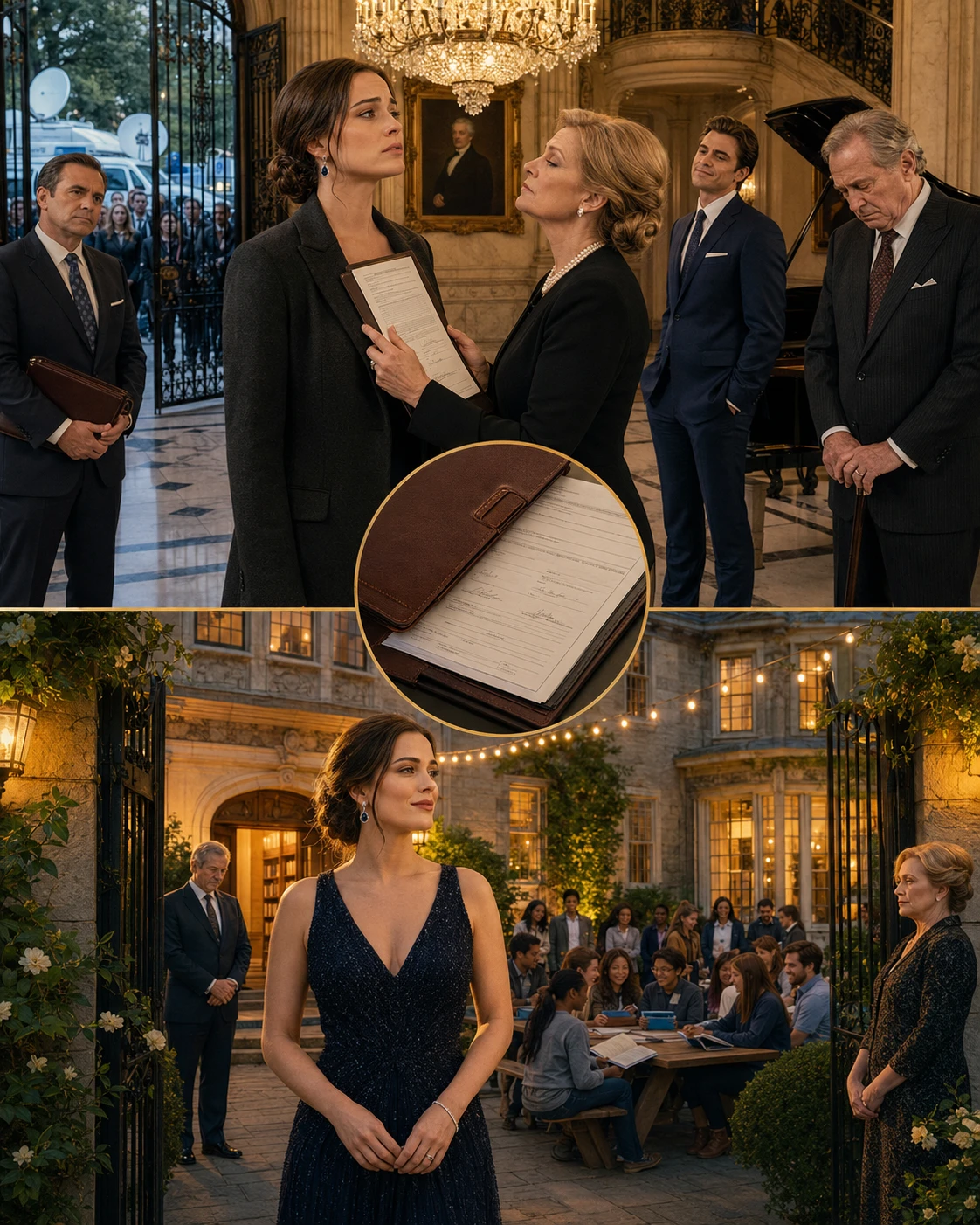
Instead, I worked with Henry to convert part of the estate into the Evelyn Vaughn Reading House, a residential literacy retreat for teachers, foster youth, and scholarship students preparing for college. The west wing became a small library. The old ballroom became a lecture space. The carriage house became offices for the foundation, now governed by an independent board with real audits and no Vaughn family vanity positions.
My grandmother would have approved.
She had loved useful things when they served the right people.
On the first day we opened the Reading House, a group of high school seniors from Dorchester arrived in a yellow bus. They stepped into the marble foyer wide-eyed, whispering under the chandelier.
One girl, maybe seventeen, paused beneath my grandmother’s portrait.
“She lived here?” she asked.
“Yes,” I said.
“Must’ve been nice.”
I looked around at the marble, the staircase, the polished floors.
Then I looked at her.
“Sometimes beautiful places still need rescuing.”
She nodded like she understood more than I expected.
Maybe she did.
Warm Conclusion: The House Finally Learned How to Be a Home
One year after the foreclosure notice arrived, I stood in the garden behind Vaughn House at sunset and watched children spread picnic blankets across the lawn.
The fountain had been repaired.
Not because it needed to impress donors.
Because the students liked tossing pennies into it before exams.
The east wing smelled like fresh paint and old books. The conservatory, once my mother’s stage for charity luncheons, now held reading circles on Saturday mornings. The dining room table where I had been accused of destroying my family was used for scholarship interviews, tax workshops, and Thanksgiving dinner for students who had nowhere else to go.
Life has a strange sense of justice.
It does not always give you back what was taken.
Sometimes it teaches you what was never worth carrying.
My father came twice a month to volunteer in the library. At first, he shelved books badly and cried when he thought no one was looking. Over time, he learned to ask instead of assume. He learned to say thank you without making it sound like a performance. We were not close in the old way, because the old way had been built on my silence.
But we were honest.
That was better.
My mother wrote letters.
Real letters, not dramatic texts. Some I answered. Some I left in a drawer until I had the strength. She began therapy. She resigned from two boards. She sold jewelry to repay a portion of what I had spent, even though I never asked her to.
One afternoon, she came to the Reading House and stood in the doorway of the conservatory while a little boy read aloud from a book about whales.
She did not interrupt.
She did not perform.
She simply watched, then found me afterward and said, “Your grandmother would be proud.”
For once, she did not add, of this family.
She said, “Of you.”
I thanked her.
That was all.
And Austin?
I heard he moved to Providence and took a job he considered beneath him. I heard he told people he had been betrayed. I heard he still believed, in some locked room inside himself, that I had stolen his life by refusing to keep funding it.
That was his burden.
Not mine.
On the anniversary of the gala, Naomi, Henry, and I hosted a small donor dinner in the garden. No cameras. No speeches about legacy. No gold-lettered programs with the Vaughn name larger than the mission.
Just teachers, students, librarians, and the people who had helped turn an old mansion into something alive.
At the end of the evening, I walked alone through the foyer.
The chandelier was dimmed. The marble floors reflected the soft light from the library. My grandmother’s portrait watched over the entry, stern and elegant as ever.
For a moment, I saw the memory again.
My mother pressing the notice against my chest.
My father refusing to look at me.
Austin smirking beside the piano.
The banker opening his folder.
The room going silent.
The old pain rose, but it did not own me.
Not anymore.
I walked to the entry table and placed my hand on the polished wood where the documents had once been spread.
Then I whispered, “We saved it, Grandma.”
But that was not completely true.
I had not saved the mansion.
I had saved myself from becoming its ghost.
Outside, laughter drifted in from the garden. A student called my name, asking if I wanted the last slice of cake. I smiled and turned toward the sound.
For the first time in my life, I did not feel useful.
I felt free.
And when I stepped out under the warm string lights, nobody asked me to carry a secret, cover a lie, or shrink so someone else could shine.
They simply made room for me at the table.
So I sat down.
And I stayed.