The last sentence of Grandpa’s letter was written smaller than the rest, like his hand had grown tired before his heart did.
Emily, if they ever make you believe love means disappearing, take what I left you and choose yourself anyway.
I read it three times before the words stopped looking like ink and started feeling like a door opening beneath me.
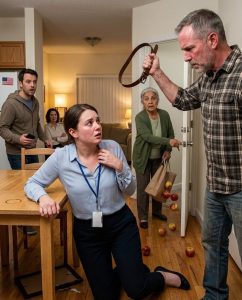
Daniel sat across from me without rushing, one hand wrapped around his coffee cup, the other resting flat on the table.
The cafe kept moving around us, spoons tapping ceramic, chairs scraping, someone laughing near the window like my world had not shifted.
Inside the envelope was another folded paper, thicker and official, with a lawyer’s name printed at the top in faded blue.
Daniel watched my face change before I understood it myself, and he said softly, “Your grandfather left you something more than a letter.”
I stared at the document, but my eyes kept returning to Grandpa’s handwriting, as if paper could still carry a pulse.
“He opened a trust for you,” Daniel said. “Not a fortune, but enough to help you stand without asking permission.”
My throat tightened so sharply that I had to look away, toward the street where cars passed through gray morning rain.
Enough to stand. Not enough to become someone else, not enough to erase everything, but enough to leave cleanly.
Daniel explained that Grandpa had tried to give it to me when I turned eighteen, before college swallowed my nights whole.
My father had told the attorney I was irresponsible, unstable, and too emotional to handle anything without family guidance.
My mother had signed a statement saying I would spend it foolishly, and Ethan had agreed because agreeing cost him nothing.
Daniel’s mouth tightened when he said that, but he did not decorate the truth with outrage or pity.
He simply pulled out another page, one with my father’s signature at the bottom, familiar and heavy as a locked door.
I wanted to say it was fake. I wanted to believe there had been some confusion, some adult misunderstanding.
But the letters were too familiar, the sharp D, the impatient slash through the T, the same hand that wrote birthday cards.
The same hand that had held a belt the night before, wrapped around his fist like an answer.
My phone buzzed on the table, and my mother’s name lit the screen with three missed calls stacked beneath it.
For a second, the old habit rose inside me so automatically that my thumb moved before my mind did.
Answer. Calm her down. Explain gently. Make it smaller. Make yourself smaller until everyone can breathe again.
Daniel looked at my hand, not my phone, and said, “You don’t have to pick it up just because it rings.”
That sentence felt almost cruel in its simplicity, because nobody had ever taught me ringing was not the same as needing.
I let the call fade. The silence after it felt louder than the ringtone, and somehow more dangerous.
Then a text appeared from Ethan, short and practical, as if last night had only been a scheduling mistake.
Daycare ends at six. Don’t punish Liam because you’re mad at Dad.
I closed my eyes, and Liam’s face came to me before Ethan’s did, sticky fingers, dinosaur pajamas, sleepy weight against my shoulder.
That was the part that hurt most, because Ethan knew exactly which door in me still opened.
Liam had never called me spare labor. He had only called me Aunt Emmy and asked why I always looked tired.
Daniel saw me fold around the thought, and he waited until I opened my eyes again before speaking.
“Your grandfather knew they would use guilt when anger stopped working,” he said. “He wrote about that too.”
He tapped the letter gently, not pushing it toward me, not pulling it away, just reminding me it existed.
I read the next paragraph again, the one I had skipped because it made my chest feel too crowded.
They will tell you a child needs you, a parent needs you, a brother needs you. Ask who decided you needed nothing.
The rain outside thickened, blurring the cafe window until every passing face became soft and unfinished.
I thought of Northshore, of children gripping parallel bars, falling, standing again while adults celebrated one more step.
Nobody there called those children selfish for learning to walk on their own. Nobody demanded they carry someone else first.
Linda had told me asking for help was not weakness, but this felt bigger than asking.
This felt like admitting I had been taught to confuse being needed with being loved.
When I returned to the center after lunch, I carried Grandpa’s letter in my bag like something breakable and warm.
Linda did not ask what Daniel had given me. She only pointed toward her office and said, “Take five minutes.”
I should have worked. I wanted to work because work had walls, forms, schedules, names printed on badges.
But when I sat in Linda’s office, the chair beneath me felt too soft, and my body finally understood morning.
My shoulder ached where the str!ke had landed. My back burned when I breathed too deeply.
I pressed my fingers against the edge of the desk, counting tiny scratches in the wood until the room stopped tilting.
Then my phone buzzed again, not from Mom or Ethan, but from an unknown number.
This is Officer Reynolds. Your father is requesting that you decline charges. He says the family wants to resolve this privately.
The word privately sat on the screen like a damp cloth pressed over my mouth.
Private meant the broken frame swept into the trash. Private meant Mom telling relatives I had exaggerated.
Private meant Dad becoming sorry in public but furious in rooms where nobody had keys.
I put the phone facedown, but my reflection stayed in the dark glass, pale and unfamiliar.
For the first time, I understood that telling the truth would not simply free me. It would change the shape of my whole family.
It would make Thanksgiving impossible. It would make cousins choose sides. It would make Liam ask questions adults avoided.
And if I stayed quiet, the world could remain almost normal, at least from a distance.
I could keep my job, dodge calls, tell myself distance was enough, and let everyone pretend last night had no name.
Linda knocked once before entering, carrying a folder and a paper cup of water.
“I’m not asking as your supervisor,” she said. “I’m asking as someone old enough to regret staying quiet before.”
Her voice did not shake, but something behind it made me look up.
“Whatever you decide,” she said, “make sure it’s your decision, not the one they trained into you.”
After she left, I sat with that sentence until the clinic hallway filled with afternoon sounds.
A child laughed too loudly. Someone dropped a clipboard. A therapist counted, “One more step, Maya. Just one more.”
One more step. Grandpa’s birthday card had said build your own life, but nobody had mentioned how loud building could be.
At five-thirty, I left work through the side entrance because I was not ready for the lobby.
Mrs. Alvarez was waiting beside her little blue car, both hands on the steering wheel though the engine was off.
“I thought you might not want to go home alone,” she said when I opened the passenger door.
I almost smiled, because she said it like offering a ride, not rescuing me.
On the drive, she kept the radio low and talked about ordinary things, a leaking faucet, rising rent, her neighbor’s stubborn cat.
The normal details steadied me more than advice would have. They reminded me life continued even after terrible rooms.
But when we turned onto my street, three cars were parked outside my building.
Dad’s pickup. Mom’s SUV. Ethan’s sedan, with Liam’s booster seat visible through the back window.
Mrs. Alvarez slowed down but did not stop. Her jaw tightened in a way that made her look less old.
“You don’t have to go in,” she said. “You can come to my apartment first.”
I looked at the building, at my third-floor window glowing weakly against the evening, and felt two lives pulling at me.
In one life, I went upstairs, listened, accepted the apology-shaped excuses, and protected Liam from adult consequences.
In the other, I stopped protecting everyone from the truth and let the pieces fall where they had already cracked.
My phone buzzed again. This time it was a video from Ethan, twelve seconds long.
Liam sat at the kitchen table, crayons scattered around him, asking, “Is Aunt Emmy mad at me?”
The sound went straight through me. Behind Liam, my mother’s voice said, too softly to be accidental, “She’s just busy now.”
I watched it once, then again, even though every replay made my stomach tighten.
They had not sent Liam because he needed me. They had sent him because they knew I would need him.
Mrs. Alvarez did not touch my arm. She only looked ahead and waited for me to breathe.
The streetlights flickered on one by one, turning the windshield into a pane of small yellow ghosts.
I thought of Grandpa saving a trust he never got to explain, of Daniel carrying proof for years without intruding.
I thought of my mother smiling at the word spare, and my father saying family came first while making me disappear.
Then I thought of Liam, who deserved more than adults teaching him love through debt and fear.
Maybe telling the truth would hurt him now. Maybe silence would teach him the same lesson that had nearly swallowed me.
I took Grandpa’s letter from my bag and unfolded it on my lap with careful hands.
The paper had softened at the creases, as if it had been waiting longer than any of us knew.
At the bottom, beneath his signature, Grandpa had written one final line I had missed before.
If you cannot save everyone, start by refusing to be used as the rope.
My breath caught, not because the sentence was beautiful, but because it was plain enough to obey.
I picked up my phone and opened Officer Reynolds’s message again.
My thumb hovered over the screen while my parents’ cars sat outside my building like a verdict.
For one long moment, I could still choose the easier lie, the one where nothing official happened.
Then Liam’s small voice replayed in my memory, asking if I was mad at him, and the answer became painfully clear.
I was not mad at Liam. I was done letting everyone else speak through him.
I typed slowly, each word landing harder than the last.
I am not declining. I want to give my statement tonight.
Before I could lose courage, I pressed send.
Across the street, my apartment window went dark, as if someone inside had seen our car and switched off the light.
Mrs. Alvarez exhaled beside me, quiet but steady, and put the car in gear.
“Where to?” she asked.
I looked at Grandpa’s letter, then at the black screen of my phone, waiting for the consequences to arrive.
“The police station,” I said, and my voice sounded frightened, but it also sounded like mine.
At the police station, the lights were too bright, and every chair in the waiting area seemed designed for discomfort.
Mrs. Alvarez sat beside me with her purse on her knees, both hands folded over it like she was holding herself still.
Officer Reynolds brought me into a small room with beige walls, a recorder, and a box of tissues nobody mentioned.
He asked questions in a voice that did not soften the facts but did not make me feel foolish for saying them.
I told him about the calls, the demand, the belt, the words spare labor, and my father’s hand tightening around leather.
When my voice shook, Mrs. Alvarez looked at me through the small window in the door and nodded once.
That nod carried me through the worst parts, especially the moment I had to describe my mother’s smile.
By the time I signed the statement, my hand hurt from gripping the pen too tightly.
Officer Reynolds explained what would happen next, temporary orders, court dates, statements, things with names and consequences.
Nothing sounded like rescue. It sounded like paperwork, waiting, and more rooms where I would have to repeat myself.
Still, when I stepped outside, the night air felt different on my face.
Not clean. Not easy. Just honest.
The first consequence arrived before sunrise.
My mother left sixteen voicemails, each one shorter and colder than the one before it.
The first said I had misunderstood. The fifth said I had embarrassed the family. The last said I was no daughter of hers.
I listened to half of one before deleting the rest.
That should have felt powerful. Instead, I sat on Mrs. Alvarez’s couch and cried into a towel from her linen closet.
She did not tell me I was brave. She made toast, placed it beside me, and let silence do its gentler work.
At work, Linda adjusted my schedule without making it feel like charity.
“You can file intake forms for a few days,” she said. “Less reaching, less lifting.”
I nodded, grateful and ashamed at the same time, because my body had become evidence.
The children at Northshore noticed things adults pretended not to see.
One little girl named Maya pointed at the edge of my bandage and asked if I had fallen.
I almost said yes because lying to children can feel kinder when the truth is too heavy.
But Maya was learning to walk again after months of therapy, and every day she was asked to face hard things.
So I said, “Someone hurt me, and now other people are helping me stay safe.”
She considered that with serious eyes, then touched her walker and said, “Me too.”
That was the first time I understood healing was not a grand moment. It was a sentence you survived saying.
Two weeks later, Daniel took me to the attorney Grandpa had named in the letter.
The office smelled like paper, coffee, and old carpet, and the attorney remembered Grandpa with a tired smile.
He confirmed the trust, the blocked letters, and the statements my parents had signed when I was eighteen.
There was no dramatic inheritance, no mansion waiting, no secret life hidden behind my childhood.
There was enough for a security deposit, a used car repair, legal help, and several months of breathing room.
I cried when I heard that, not because it was a fortune, but because Grandpa had understood the cost of leaving.
The attorney slid copies across the table, including one letter my father had returned unopened years earlier.
On the envelope, Grandpa had written: For Emily, not for permission.
Daniel looked away while I pressed my palm over those words.
Some truths did not shout when they arrived. Some simply sat in front of you until denial became too tiring.
The court hearing came on a rainy Tuesday morning.
My father wore a clean shirt and looked smaller than he had in my apartment, which made me angry in a new way.
I had expected him to look monstrous. Instead, he looked like a tired man who still believed authority should protect him.
Mom sat behind him, purse in her lap, lips pressed thin, refusing to meet my eyes.
Ethan stood near the back wall, checking his phone every few minutes, as if inconvenience was still the deepest wound.
When I gave my statement, my father stared at the table.
My mother stared at the judge.
Ethan stared at the door.
Nobody stared at me until the photographs were shown.
The marks on my shoulder appeared on a screen larger than life, red and purple against my skin.
The room became very still.
For months, my family had survived by making things smaller, softer, easier to excuse.
But there was nothing soft about a photograph.
My mother made a sound then, not a sob, not an apology, something closer to irritation being cornered by proof.
The judge granted the protective order and scheduled further proceedings.
My father was ordered to stay away from me, my workplace, and my apartment building.
Mom was not included in the order, but something between us had already been signed and sealed.
Outside the courtroom, Ethan approached me while Daniel stood a few feet away.
For once, my brother did not look bored. He looked annoyed, scared, and almost young.
“You know Liam keeps asking for you,” he said.
I swallowed because that name still had power, and maybe it always would.
“I know,” I said.
“So what am I supposed to tell him?”