PART 3 — The Syringe with My Name on It
By midnight, I thought Adrian Vance had already done his worst.
I was wrong.
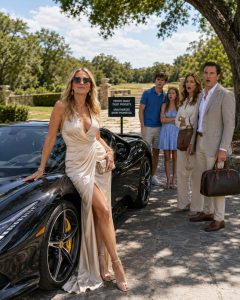
My name is Maya Vance, and three hours after I watched my husband’s face turn pale in front of an empty foundation, my phone rang from Mercy South Hospital.
“Room 318,” the charge nurse gasped. “Maya, you need to get here. Now.”
I should not have gone.
I had been awake for nearly two days. My children were crying in my rearview mirror. Adrian was screaming into his phone. Kendra was standing in the driveway like someone had stolen the crown off her head.
But I had been a nurse for eighteen years.
When someone called code, I ran.
By the time I reached Room 318, the hallway was chaos. Nurses rushed past with crash carts. A monitor shrieked behind the door. Security guards stood shoulder to shoulder like a wall.
And at the center of it all stood Nathan Kang.
Everyone in the city knew that name.
Some called him a businessman. Some called him worse. The kind of man whose suits cost more than a nurse’s yearly grocery bill. The kind of man who could make a room go quiet without raising his voice.
His father, Elias Kang, lay on the bed, gray-faced and still, while the team worked over him.
Then I saw it.
A syringe had rolled beneath the bed.
I picked it up without thinking.
The label was white, clean, and freshly printed.
MAYA VANCE — RN. MORPHINE SULFATE.
My blood went cold.
“I didn’t pull this,” I whispered.
Nathan turned toward me.
His eyes moved from my face to the syringe. He did not blink.
The hospital administrator, Dr. Bell, came rushing in behind me. “Maya,” she said, too loudly, “step away from the patient.”
The entire hallway heard her.
That was the point.
I stared at the syringe in my hand. “Someone used my name.”
Dr. Bell’s mouth tightened. “Your badge accessed the medication cabinet at 1:42 a.m.”
“At 1:42 a.m.,” I said, my voice breaking, “I was at my attorney’s office signing trust documents.”
Nathan’s eyes sharpened.
“Trust documents?” he asked.
I should have stayed silent.
But I was tired of being erased.
“My husband tried to throw me out of a house he never owned,” I said. “So I moved it.”
For the first time that night, Nathan Kang looked surprised.
Then his father’s monitor gave one long, thin sound.
The room froze.
A doctor shouted, “Pulse is back!”
Everyone moved again.
Everyone except Nathan.
He stepped closer to me, and the air seemed to lean away from him.
“If my father dies,” he said softly, “the person who did this will not have time to regret it.”
I looked him directly in the eye.
“Then you should start looking for someone who hates old things.”
His expression changed.
Just a flicker.
But enough.
Because somewhere in that brutal, shining room, Adrian’s message was still glowing in my mind.
Be gone when we return. I hate old things.
And now those same words had followed me into a hospital where a powerful man had nearly died.
This was no longer a divorce.
This was a trap.
PART 4 — The Badge That Lied
They put me in a conference room with glass walls and no clock.
That was how hospitals punished people before the police arrived. They placed you somewhere visible, somewhere cold, somewhere everyone could watch you fall apart.
I did not fall apart.
Not yet.
Dr. Bell sat across from me with folded hands. Beside her was hospital security. Behind them stood Nathan Kang, silent as a blade.
“Maya,” Dr. Bell said, “your badge opened the medication room. Your code released the drug. Your name printed the label.”
“My badge was stolen.”
“When?”
I thought back through the wreckage of the day.
The airport. Adrian’s SUV. Kendra’s scream. Marcus whispering, Dad… what did you tell us Mom did?
Then a small memory slid into place.
Kendra hugging Lila too tightly outside the empty lot. Kendra’s manicured hand brushing my coat from the passenger seat when I reached into my car.
My purse had been open.
“My badge was in my purse,” I said slowly.
Dr. Bell sighed. “That is not enough.”
Nathan finally spoke. “It may be.”
Everyone turned.
He looked at the security chief. “Pull every camera from the medication room, hallway, parking garage, and south entrance between midnight and two.”
The security chief stiffened. “Mr. Kang, that’s internal hospital property.”
Nathan smiled without warmth. “My father is internal hospital property tonight too.”
No one argued after that.
While they searched the footage, my phone buzzed.
A message from Marcus.
Mom, Dad says you tried to hurt someone at the hospital. He says you’re dangerous. Is it true?
I pressed the phone to my chest.
The pain of that question was sharper than fear.
Before I could answer, another message arrived.
From Lila.
I don’t know what to believe. Kendra said you’re trying to ruin everyone because Dad found happiness.
I closed my eyes.
There it was.
Not just the house. Not just the children. Not just the wedding.
Adrian was rebuilding reality around me, one lie at a time.
I typed with shaking fingers.
I have never hurt a patient. I have never abandoned you. I need you both to remember who tucked you in when you were sick. Remember who stayed.
I sent it before courage could leave me.
The door opened.
Security returned with a laptop.
The footage appeared grainy and blue. At 1:39 a.m., a woman entered the medication room wearing scrubs, a mask, and my badge.
Same height. Same hair color. Same walk from a distance.
But then she turned toward the cabinet camera.
For half a second, her mask slipped.
The room went silent.
Dr. Bell whispered, “That isn’t Maya.”
Nathan leaned closer.
The woman on screen had glossy blonde hair tucked under a surgical cap.
A diamond bracelet flashed at her wrist.
I knew that bracelet.
Kendra had worn it in every wedding photo Adrian’s family posted.
My stomach twisted.
“She was at the resort,” Dr. Bell said. “Wasn’t she?”
I laughed once.
It sounded terrible.
“She landed with Adrian this afternoon.”
Nathan’s gaze did not leave the screen.
“What does your husband do, Mrs. Vance?”
“Corporate law.”
“For whom?”
“Vance & Whitlock.”
His jaw tightened.
Then I understood.
Nathan knew that firm.
And from the look on his face, Adrian had not only made an enemy of me.
He had made an enemy of the Kangs.
PART 5 — The Bride Who Smiled Too Long
By dawn, Elias Kang was alive but unconscious.
By six, I was suspended.
By seven, my children were waiting outside the hospital.
Marcus stood near the entrance, tall and pale, his hands clenched. Lila was wrapped in one of Adrian’s expensive resort hoodies, mascara smudged beneath her eyes.
The moment she saw me, her face crumpled.
“Mom?”
One word.
That was all it took.
I held out my arms, and she ran into them like she was little again.
Marcus did not move at first. He stared at me with a boy’s fear and a man’s shame fighting inside him.
Then he whispered, “Dad said you destroyed the house because you hated us.”
I felt something inside me tear.
“No,” I said. “I saved what belonged to our family.”
“But it’s gone.”
“The shell is gone from that land,” I said. “The home is not.”
Lila pulled back. “What does that mean?”
Before I could answer, Adrian’s voice sliced across the sidewalk.
“It means your mother is unstable.”
He came striding toward us in yesterday’s wrinkled wedding linen, his face hard with exhaustion. Kendra followed behind him, sunglasses hiding half her face.
Even then, she looked beautiful.
That was the cruel thing about some people.
They could stand beside the wreckage they caused and still look camera-ready.
“Children,” Adrian said, “get in the car.”
Neither child moved.
His eyes sharpened. “Now.”
Marcus stepped slightly in front of Lila.
It was small.
It was everything.
Kendra smiled. “This is exactly what we warned you about, Adrian. She’s turning them against you.”
I looked at Kendra’s wrist.
No bracelet.
“Where’s your diamond bracelet?” I asked.
Her smile twitched.
Adrian snapped, “Do not speak to my wife.”
The word wife hit me like a slap.
I looked at him.
“You married her before divorcing me?”
His face froze.
Kendra’s chin lifted. “The ceremony wasn’t legal yet. It was symbolic.”
Nathan Kang’s voice came from behind me.
“Convenient.”
Adrian turned, and for the first time that morning, fear entered his expression.
Nathan walked toward us with two men behind him. Not bodyguards exactly. Something quieter. Something worse.
“Mr. Vance,” Nathan said. “My father was reviewing your firm’s resort acquisition files before he was poisoned.”
Adrian recovered quickly. He always did. “I don’t know what you’re implying.”
“I’m implying nothing.” Nathan smiled. “I’m stating that someone used your fiancée’s face, your wife’s stolen badge, and a drug label from this hospital to try to kill Elias Kang.”
Kendra let out a brittle laugh. “That’s insane.”
“Is it?” I asked.
Her sunglasses shifted.
For one second, I saw the panic beneath them.
Adrian saw it too.
And that was when I realized something shocking.
He had not known all of it.
Adrian had planned to erase me socially, financially, maternally.
But murder?
That belonged to Kendra.
Or so I thought.
Then Marcus spoke.
“Dad,” he said, voice trembling, “why did Kendra have Mom’s hospital badge in her beach bag?”
Silence dropped like a stone.
Kendra’s head snapped toward him.
Marcus swallowed hard. “At the resort. I saw it. I thought it was weird. She said Mom sent it because she wanted to ruin the wedding.”
Lila began crying again.
Adrian looked at Kendra.
“Kendra?”
She took one step back.
Then another.
Nathan’s men moved without needing instruction.
But Kendra did not run.
She laughed.
It was soft at first, then sharp enough to make everyone stare.
“You all think this is about some old nurse?” she said. “This is about money. Real money. The kind none of you sentimental people understand.”
Her eyes landed on me.
“Your father’s land was supposed to be the final piece.”
My breath stopped.
“What did you say?”
Kendra smiled again.
“Adrian didn’t marry me because he loved me, Maya.”
Adrian’s face went white.
She turned to him sweetly.
“I chose him because he was stupid enough to think I did.”
PART 6 — The File Hidden in the Piano
The police came after that.
Not because they cared about me.
Because Nathan Kang called someone who called someone higher.
Kendra was not arrested immediately. People with money and lawyers rarely fall in one clean motion. They are lowered gently into consequences, arguing the whole way down.
Adrian tried to leave with the children.
Marcus refused.
Lila held my hand.
That hurt him more than the empty land.
We drove to my mother’s storage barn two towns over. Rain began falling in silver lines across the windshield. Lila fell asleep against the window. Marcus sat beside me in silence, staring at his phone.
Finally, he said, “Where’s the house, Mom?”
I turned down a private gravel road.
At the end of it stood the impossible.
Our house.
Not all at once. Not whole yet. But there it was—walls braced, porch wrapped in tarps, windows removed and labeled, the bones of it waiting to breathe again.
Lila woke and gasped.
“You moved it?”
“I removed mine,” I said, and smiled despite everything.
The children climbed out slowly.
Marcus walked to the kitchen doorway panel leaning beneath a tarp. The height marks were still there.
Marcus — age 5. Lila — age 3. Marcus — age 10. Lila — age 12, finally taller than Mom.
He touched the pencil lines as though they might forgive him.
“I believed him,” he said.
I stood beside him. “You’re allowed to be confused when adults lie beautifully.”
He shook his head. “I should’ve known.”
“You’re seventeen,” I said. “You should have been protected from knowing.”
Inside the barn, my mother’s piano sat beneath a quilt. It had been the hardest thing to move. My father bought it for her when they had no money and paid for it in installments so small the shop owner laughed.
Lila lifted the fallboard and pressed a key.
A low note filled the barn.
Then something clicked.
A small panel beneath the music stand popped loose.
We all froze.
Marcus reached in and pulled out a sealed envelope yellowed with age.
My name was written across it in my father’s handwriting.
MAYA — WHEN THE HOUSE IS THREATENED
My hands shook so badly Marcus had to open it.
Inside were documents, a flash drive, and a letter.
My father’s words blurred at first.
Then they became knives.
Maya, if you are reading this, Adrian has finally mistaken patience for weakness.
I covered my mouth.
The letter continued.
The Vance firm approached me years ago with a land scheme. They wanted the riverfront parcel for a resort project connected to offshore accounts. I refused. I placed the property into trust because I suspected Adrian’s interest in you was not entirely love. I hoped I was wrong. A father is allowed to hope.
Lila whispered, “Grandpa knew?”
Marcus unfolded another page.
It was a ledger.
Names. Dates. Shell companies.
And there, near the bottom, was Adrian’s signature.
Beside it was another name.
Kendra Vale.
Not colleague.
Not fiancée.
Not bride.
Partner.
The flash drive contained videos from my father’s old office. Audio recordings. Scanned contracts.
And one file titled:
ELIAS KANG — PROTECTED WITNESS
My phone rang.
Nathan.
I answered with my heart pounding.
His voice was controlled, but something beneath it shook.
“My father is awake,” he said.
“What did he say?”
Nathan paused.
“He said your father saved his life once.”
I looked at the letter in my hand.
Rain hammered the barn roof.
“And?”
“And he says Adrian Vance has been trying to sell land he never owned for seven years.”
PART 7 — The Man with No Sentence Left
Adrian came to the barn at sunset.
Of course he did.
Men like Adrian do not understand locked doors until they break their own hands on them.
He arrived alone, soaked from the rain, no polished speech prepared. His shirt clung to him. His wedding tan had faded into something gray.
“Maya,” he said.
I stood on the porch frame of the half-rebuilt house while Marcus and Lila watched from inside the barn.
“No,” I said. “Not near them.”
His eyes flicked past me.
“Kids, please. I need to explain.”
Marcus answered, “Explain why Kendra had Mom’s badge.”
Adrian flinched.
Lila’s voice followed, smaller but steadier. “Explain why you said Mom didn’t want us.”
He opened his mouth.
Nothing came out.
For nineteen years, Adrian had survived by speaking first. By naming things before anyone else could. Wife. House. Family. Failure. Upgrade.
Now every word he had used was standing in front of him, demanding proof.
“I didn’t know she would hurt anyone,” he said finally.
“But you knew she stole my badge,” I said.
He swallowed.
“You knew she planned something.”
“She said she needed leverage,” he whispered. “She said if you were under investigation, the trust would freeze. We could negotiate. I didn’t think—”
“You didn’t think she would actually use the syringe?”
He stared at the ground.
I stepped closer.
“Adrian, did you send the message telling me to be gone?”
His face twisted.
“Yes.”
“Did you tell our children I abandoned them?”
His silence answered.
“Did you plan to take control of my father’s land through a false claim of mental instability?”
He looked up fast.
That was the one.
The secret beneath the secret.
“You don’t understand what was at stake,” he said.
I almost laughed.
“No. I understand perfectly. You thought love was paperwork. You thought motherhood was custody. You thought a home was a structure you could stand inside and claim.”
He wiped rain from his face. “I built a life there.”
“You occupied one.”
His eyes filled, though whether from guilt or fear, I couldn’t tell.
Then headlights appeared at the end of the road.
Nathan stepped out first.
Behind him came two police cars.
Kendra sat in the back of one of them, wrists cuffed, screaming through the glass. Her perfect hair had fallen loose. Her lipstick was smeared.
Nathan walked up beside me and handed Adrian a phone.
“Your bride gave a statement.”
Adrian stared at him.
Nathan continued, “She said you knew enough.”
Kendra’s muffled voice carried through the rain.
“He promised me the land! He promised me Elias would sign! He promised!”
Adrian looked at the children.
Marcus turned away.
That broke him.
Not the land. Not the police. Not Kendra.
His son turning away.
An officer read Adrian his rights.
He did not argue.
He only looked at me once as they led him past.
“What happens to me now?” he asked.
I thought of the ceiling fan turning at 2:13 a.m. I thought of the message. I thought of all the years I had mistaken endurance for peace.
“I don’t know,” I said. “You edited me out of your life.”
I looked toward the house.
“Now you can see what the final draft looks like.”
PART 8 — The House That Chose Us Back
Three months later, Elias Kang came to see the house.
He arrived in a black car with Nathan beside him, moving slowly with a cane. He was thinner than he had been in the hospital, but his eyes were bright and amused.
“I expected ashes,” Elias said, looking at the rebuilt porch. “This is better.”
“It was never destroyed,” I said.
“Good.” He nodded. “Men like Adrian hate what survives without their permission.”
The criminal cases unfolded like storms in the distance.
Kendra took a deal and named everyone. Adrian’s firm collapsed under federal investigation. Dr. Bell resigned after records showed she had buried complaints about forged badge access for months. The resort project died before ground was ever broken.
As for Adrian, the children chose when to speak to him.
Marcus wrote one letter.
Lila wrote none.
I did not interfere.
That was the hardest mercy.
The shocking part came later, on a warm Saturday in June, when Nathan arrived carrying a cardboard box.
“My father insisted,” he said.
Inside was a deed.
Not to my land.
To the abandoned clinic beside Mercy South.
Elias had bought it years ago and never used it.
“He wants it transferred to your family trust,” Nathan said. “For one dollar.”
I stared at him. “Why?”
Nathan looked toward the house, where Marcus was teaching Lila how to sand the porch rail.
“Because your father once hid mine there when men came to kill him,” he said. “Because your family protected people before anyone knew they needed protection.”
My throat tightened.
“What am I supposed to do with a clinic?”
Nathan smiled.
“Whatever old things do best.”
So we opened Morrow House six months later.
Not as a mansion.
Not as a monument.
As a legal and medical support center for women who had been told to disappear. Nurses volunteered. Retired lawyers came. My mother’s piano sat in the front room. My father’s books lined the walls.
And the kitchen doorway, with all those old height marks, hung behind glass near the entrance.
Beneath it was a small plaque Marcus wrote himself:
A home is not what a man claims.
It is what love refuses to abandon.
On opening day, Lila stood beside me in a yellow dress and whispered, “Mom?”
“Yes?”
“I’m sorry I believed them.”
I took her hand.
“You came back to the truth. That matters more.”
Marcus joined us, taller than me now, but still my boy.
“Do you miss the old version?” he asked.
I looked at the porch filled with people. Survivors. Children. Nurses. Volunteers. Elias Kang laughing with my attorney. Nathan standing beneath the oak tree, watching quietly.
Then I looked at my children.
“No,” I said. “I think this is what the house wanted to become.”
That evening, after everyone left, Nathan stayed to help stack chairs.
He found me by the piano.
“You know,” he said, “my father thinks your father planned all of this.”
I smiled. “My father planned for disasters. Not miracles.”
Nathan’s gaze softened.
“Maybe he knew the difference was smaller than people think.”
Outside, fireflies rose over the grass where the house had been set down again, whole and stubborn beneath the stars.
My phone buzzed once.
A message from an unknown number.
For a second, my body remembered fear.
Then I opened it.
It was from Adrian.
I’m sorry.
Two words.
Too late to fix anything.
But not powerful enough to ruin anything either.
I deleted the message.
Then I closed the piano, turned off the lights, and stepped onto the porch where my children waited.
The night smelled of rain and lemon oil.
The old wood creaked beneath my feet.
And for the first time in nineteen years, no one was telling me to leave.
The house was mine.
The children were safe.
The story was no longer Adrian’s to edit.
And somewhere beyond the fields, the empty stone steps still stood on the land he had tried to steal, leading to nothing.
But here, beneath the old oak tree, our door opened wide.
Not to the past.
To the life we built after it.