Camila Reed left her graduation with a diploma folder under her arm and a silence in her chest that felt heavier than the degree itself.
The stadium had been loud enough to shake the metal bleachers.
Families cheered until their voices cracked, paper programs fluttered in the May heat, and the bright white sun made every smile look sharper than it felt.
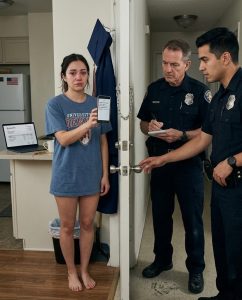
When the announcer called, “Camila Elaine Reed, Master of Data Analytics,” she walked across the stage with her chin high.
She had promised herself she would not look toward the family section.
She looked anyway.
The seats where her parents should have been were empty.
Not half-empty.
Not temporarily empty because someone had gone to buy water.
Empty in the permanent way that makes your stomach understand before your mind does.
Camila kept smiling because the photographer had already lifted the camera.
That was a skill she had practiced for years.
Smile when your mother forgets.
Smile when your father makes an excuse.
Smile when Avery becomes the reason everything important to you can wait.
After the ceremony, strangers asked her to step aside so they could take pictures with whole families wrapped around one graduate.
A grandfather cried into his granddaughter’s shoulder.
A mother pressed flowers into her son’s arms and fixed his crooked hood.
A little brother jumped into a photo with both hands raised, ruining the shot and making everyone laugh.
Camila stood near the edge of the walkway with her diploma folder tucked against her ribs.
Her phone stayed quiet.
No missed call.
No apology.
No rushed message saying traffic had been awful or they had gone to the wrong gate.
She checked twice anyway.
Then she hated herself for checking.
This was not a surprise, and that almost made it worse.
Her parents had skipped her college graduation too.
Dad had said his back was acting up.
Mom had said Avery had rehearsal.
Before that, there had been award nights, scholarship banquets, parent weekends, and small ceremonies where Camila had scanned doors until her face hurt from pretending she had not expected anyone.
There was always an explanation.
There was always a tone that made Camila feel unreasonable for being disappointed.
There was always Avery.
Avery needed piano lessons.
Avery had a trip.
Avery needed a dress.
Avery had a chance Camila was supposed to help pay for because older sisters were supposed to understand.
Camila had understood too much for too long.
At sixteen, she worked early shifts at Starbucks before school.
She would show up to first period smelling like espresso and sugar syrup, with aching feet and homework half-finished on the bus.
At nineteen, she sent money home from a campus job while stretching a pack of instant noodles over two meals.
At twenty-four, she handled rent, tuition, loan paperwork, car repairs, groceries, and the family emergencies that somehow never belonged to anyone else.
Mom was always grateful at first.
Her texts began with sweetheart and ended with pride.
“You’re our pride, Camila.”
“Just a little extra.”
“Avery needs this.”
For a long time, Camila let herself believe gratitude was love.
She thought if she became useful enough, reliable enough, impressive enough, her mother would finally see the daughter behind the bank transfer.
Graduate school became the newest test.
She studied after work with her eyes burning.
She took statistics exams with a migraine.
She skipped dinners, delayed dental work, and learned to celebrate small wins alone because saying them out loud at home only made Mom ask whether the degree came with better pay.
The day she finished, Camila told herself the ceremony might be different.
A master’s degree was hard to ignore.
The stadium was public.
There would be photos.
Surely her parents would show up for this one day.
They did not.
Three days later, the cap and gown still hung beside Camila’s apartment door.
She had left them there because she could not decide whether she wanted to preserve the proof or punish herself with it.
Every time she passed, the navy fabric brushed the wall.
Every time it moved, she remembered the empty seats.
That Tuesday night, rain hissed on the street below her apartment.
The refrigerator hummed.
Her laptop sat open on the kitchen table beside the blue dental estimate she had not wanted to open again.
At 8:16 p.m., her phone lit up.
Mom.
For one foolish second, Camila thought maybe this was it.
Maybe Mom had waited a few days because she felt guilty.
Maybe she had finally found the words.
The message opened without apology.
“I need $2,100 for your sister’s Sweet 16.”
Camila stared at it until the screen dimmed.
No “How was graduation?”
No “I’m sorry.”
No “We should have been there.”
Just a number.
Just Avery.
Just another emergency dressed like family.
Camila opened her banking app because her fingers had been trained longer than her pride had been awake.
Her savings account showed $3,084.22.
She knew exactly what that meant.
Rent was due in nine days.
Student loan auto-pay would draft on the 15th.
Her brakes had started making a grinding sound that made every stoplight feel like a warning.
The dentist had already handed her a folded estimate, and the blue folder sat nearby like an accusation.
There was not $2,100 to spare.
There had never been $2,100 to spare.
Still, her thumb hovered over the transfer button.
That tiny motion made her feel more ashamed than the text itself.
Her mother had not forced her hand across the screen.
Years had done that.
Years of being praised only when she paid.
Years of being called selfish whenever she hesitated.
Years of hearing Avery’s name used like a moral debt Camila had been born owing.
At 8:21 p.m., Camila typed $1.00.
In the note, she wrote “Congrats.”
Then she sent it.
The banking app did not crash.
Thunder did not roll.
No one appeared to declare that daughters were allowed to stop bleeding themselves dry.
The word Sent simply appeared on the screen.
Small.
Plain.
Final.
Camila sat very still with the phone warm in her hand.
Then she stood.
Near the front door was the drawer where she kept tape, batteries, takeout menus, and the spare key Mom had insisted on having.
Mom had called it an emergency key.
The word emergency had stretched over the years until it meant anything Mom wanted.
Once, she used the key to borrow Camila’s blender without asking.
Once, she used it to drop Avery’s laundry inside because Camila’s building had better machines.
Once, she let herself in, stood in Camila’s kitchen, and called Camila selfish for asking when she planned to pay back the last money she had borrowed.
Camila took the spare key from the drawer.
It looked harmless in her palm.
That almost made her angrier.
A key is small until someone uses it to teach you that your own door does not belong to you.
She dropped it into the trash.
At 9:04 p.m., she called a locksmith.
Her voice sounded calmer than she felt.
At 9:17, the invoice arrived in her email.
At 10:38, a man in a gray hoodie and work boots stood in the hall with a toolbox.
He did not ask why she needed the lock changed that late.
Camila was grateful for that.
The old screws clicked into his palm one by one.
The deadbolt came loose.
The door looked naked for a moment, like a boundary between one life and another.
Then the new lock went in.
When it slid into place, the sound was clean.
Camila almost cried from how ordinary it was.
Some people imagine a boundary arriving as a speech.
Camila’s arrived as a receipt, a new deadbolt, and a spare key at the bottom of a trash can.
The story continues — don’t miss what happens next