They took my siblings to the beach and said, “It’s better you stay behind and work.”
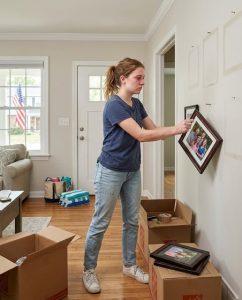
When they returned, my room was stripped bare, and every picture of me was missing from the walls.
My name is Winifred, and I was nineteen when I finally understood that being useful is not the same thing as being loved.
That sentence sounds simple now.
At the time, it felt like a door opening under my feet.
Eighteen months have passed since that weekend, but I can still remember the smell of sunscreen in the kitchen, the wet slap of flip-flops by the back door, and the bright scrape of beach coolers being dragged across the driveway.
Jennifer had bought new towels for the trip.
Blue for Emma.
Green for Tyler.
White for her and my dad, Marcus, because Jennifer believed adults deserved matching things and I was apparently not one of the adults when it came to rest.
I stood beside the kitchen counter with my café shoes still damp from the night before, holding Tyler’s missing hoodie in one hand.
I had found it under the dryer at 6:40 that morning, after Jennifer had told everyone he must have left it at school.
That was my role in the house.
Not daughter.
Finder.
Cleaner.
Emergency backup.
The person everybody expected to know where the lost things were, even when I was one of them.
My biological mom died when I was seven.
People say children are resilient because it makes adults feel less guilty about what children survive.
I was not resilient.
I was quiet.
There is a difference.
For two years after she died, it was just me and Dad in a house that smelled like old coffee, floor cleaner, and the lavender lotion my mother used to keep beside the sink.
He used to call me kiddo in a voice that made me believe I still had a soft place to land.
Then he married Jennifer.
I do not remember her being cruel in one dramatic moment at first.
It was smaller than that.
My cereal disappeared from the pantry because “the kids need the good kind.”
My weekend mornings became babysitting mornings because “you’re not doing anything anyway.”
My room became the place where extra laundry baskets were dumped because “you have space.”
By the time Emma and Tyler were old enough to notice me, the family had already made a decision about what I was.
I was not quite outside.
I was not quite inside.
I was convenient.
Emma and Tyler never treated me that way on purpose.
Emma used to crawl into my bed after nightmares and press her cold little feet against my legs.
Tyler followed me around with Lego sets, asking me to find the piece that made the roof stay on.
They loved me in the honest way children love the person who shows up.
That was the hardest part.
Jennifer could dismiss me all day, but Emma and Tyler kept handing me evidence that I mattered.
I would pack their lunches.
I would check homework.
I would braid Emma’s hair before school picture day because Jennifer said she was too busy, then Jennifer would post the photo online with a caption about “my beautiful girl.”
I would sit on Tyler’s floor after midnight when he had a fever, counting minutes between doses of medicine, and Jennifer would tell relatives the next morning that motherhood was exhausting.
I never corrected her.
I thought peace was something you earned by swallowing the truth.
By senior year, I had a 3.8 GPA, a part-time job at a local café, and a college savings envelope hidden in the back of my sock drawer.
Every week, I put cash inside it.
Sometimes it was thirty dollars.
Sometimes it was eight.
Once it was two wrinkled ones and a handful of coins because Jennifer had needed me to cover groceries when Dad’s check hit late.
She said she would pay me back.
She did not.
I told myself all of it was temporary.
I told myself college would be the clean break.
I told myself I could survive one more semester of deep-cleaning bathrooms, folding other people’s socks, and pretending it did not hurt when Jennifer said “we” and somehow never meant me.
Then came spring break.
Jennifer announced the Virginia Beach trip on a Wednesday while unloading groceries.
She said it in that cheerful planning voice she used when she had already decided everything.
“We’re leaving Friday morning,” she said. “Just the weekend. The kids need it.”
My chest lifted before I could stop it.
I had not seen the ocean in years.
I imagined sitting with Emma in the sand while Tyler chased foam at the edge of the waves.
I imagined the salty air getting into my hair and the kind of tired that comes from sunlight instead of chores.
For a few seconds, I let myself be nineteen.
Then Jennifer put a box of cereal into the pantry and said, “Actually, Winifred, it’s better if you stay behind and work.”
The words were not shouted.
That almost made them worse.
She said them like they were reasonable.
Like she had just moved a chair to make room at the table.
I looked at her.
She did not look embarrassed.
“Someone needs to deep clean the house while we’re gone,” she continued. “And you can pick up extra shifts at the café. You’re always talking about saving for college.”
I remember the dishwasher humming.
I remember one drop of water sliding down the side of the sink.
I remember Tyler’s hoodie getting tighter in my hand.
“Quality family time,” Jennifer added.
That was the phrase.
Not beach trip.
Not weekend away.
Quality family time.
The sentence made the room tilt.
I was standing in a house I maintained but did not belong to.
I turned to my dad.
He was at the kitchen table, newspaper open, coffee cooling beside his wrist.
I waited for him to say my name like it mattered.
He did not even fold the paper.
“Jennifer’s right, kiddo,” he said. “You’ll be more productive here anyway.”
Kiddo.
That word used to feel like a blanket.
That day, it felt like a receipt.
I said, “I haven’t had a real break in months.”
My voice shook, and I hated that.
“I take care of Emma and Tyler every weekend. I work. I keep my grades up. I do the chores. I need this.”
Jennifer gave me the smile she used in public when she wanted everyone to know she was the reasonable one.
“We’ve given you a roof and food for ten years,” she said. “The least you can do is not be selfish.”
Selfish.
I had been called responsible when I covered for adults.
Helpful when I gave up sleep.
Mature when I did not ask for things.
The first time I asked for rest, I became selfish.
On Friday morning, the house was all motion.
Suitcases stood by the door.
Beach towels were rolled and tied.
Emma came down with her hair half-brushed and tears in her eyes.
“I wish you could come,” she whispered, wrapping her arms around my waist.
Tyler hugged my legs.
“Who am I going to play video games with?”
I wanted to tell them the truth.
I wanted to say, “Your mom decided I am not family when rest costs money.”
Instead, I smiled so hard my face hurt.
“Take pictures for me,” I said.
Jennifer heard me and rolled her eyes.
“Do not make them feel guilty.”
Dad looked away.
That was what he did best.
Jennifer shut the front door behind them.
The SUV backed out of the driveway.
Through the window, I saw the small American flag by the porch lift once in the morning heat, then fall still again.
The quiet that followed was not peaceful.
It was diagnostic.
No cartoons in the den.
No Jennifer calling from upstairs.
No Dad asking where his keys were.
No Emma yelling that Tyler had stolen her charger.
The refrigerator hummed.
Somewhere in the laundry room, the dryer clicked as it cooled.
I stood there for a long time with my hand still on the kitchen counter.
Then something inside me stopped bargaining.
I did not cry.
I did not scream.
I did not call Jennifer and beg.
I went upstairs.
At 9:17 a.m., I took the first photo.
My bedroom looked the way it always did.
Twin bed against the wall.
Desk under the window.
Honor roll certificate in a cheap black frame.
Mom’s jewelry box on the shelf.
Café uniform folded over the chair.
At 9:42 a.m., I photographed the living room gallery wall.
There I was at twelve, standing beside Dad at a school awards night.
There I was at sixteen, holding Emma after her dance recital.
There I was last Christmas, half-cut out of a photo Jennifer had posted with the caption “my whole world.”
At 10:06 a.m., I photographed the refrigerator.
Emma’s family drawing hung under a magnet shaped like a seashell.
She had drawn Dad, Jennifer, Tyler, herself, and me.
My name was written in purple marker.
The R was backward.
I packed my room first.
Clothes.
Books.
Laptop.
Phone charger.
Old journals.
My café uniforms.
The jewelry box that had belonged to my mother.
I wrapped the jewelry box in a hoodie so it would not rattle in the car.
Then I drove to a storage place near the strip mall and rented the smallest unit they had.
The woman behind the counter asked if I needed boxes.
I said yes.
My hands shook signing the rental form.
Not from fear exactly.
From the strange, sharp feeling of doing something no one had given me permission to do.
I made trips all day in my beat-up Honda Civic.
Box after box.
Bag after bag.
By midafternoon, my arms ached when I turned the steering wheel.
By evening, my bedroom looked like a room waiting for a new tenant.
That was when I realized I could still feel the house trying to claim me.
My towels in the bathroom.
My mug in the cabinet.
My detergent in the laundry room.
My face on the walls.
My name on the fridge.
I stood in the hallway and understood something that made me feel both sad and calm.
They had never thought of my things as belonging to me.
They had thought of them as part of the house.
So I removed them from the house.
I did it carefully.
I did it cleanly.
I did not take anything that was not mine.
I documented every room before I touched it, then documented it again after.
That mattered because people like Jennifer do not panic by admitting what they did.
They panic by rewriting what happened.
I took down every family photo that included me.
I did not replace the frames.
I left the pale rectangles on the wall.
I took down Emma’s drawing from the fridge and slid it into a folder to keep safe.
I removed my honor roll certificate.
My name mug.
The beach magnet I had bought on a school trip.
The shampoo Jennifer always used when she ran out of hers but never replaced.
The laundry detergent I bought with café tips.
The blue towel Tyler always stole because he liked how soft it was.
Piece by piece, I pulled myself out of the house.
By Sunday afternoon, it looked edited.
Not destroyed.
Not trashed.
Edited.
As if someone had finally made the family portrait honest.
At 4:38 p.m., Dad texted.
Almost home. Hope you got a lot done.
I looked at the message for a long time.
Then I placed a manila envelope on the kitchen counter.
On the front, I wrote BEFORE I LEFT.
Inside were printed photos from my phone.
My room before.
My room after.
The hallway before.
The hallway after.
The fridge before.
The fridge after.
The storage receipt was clipped to the last page.
On the back of the final photo, I wrote one sentence.
You said I was more useful here, so I removed everything that was only here because of me.
The garage door rattled open beneath my feet.
Jennifer’s voice floated up from the mudroom, bright and irritated.
“Winifred, we need help unloading the car, and I hope you didn’t leave this place a disaster because—”
“Because what?” I asked.
My voice came from the top of the stairs.
She looked up first.
For a second, she did not understand what she was seeing.
People expect anger to look messy.
They do not know what to do when anger is organized.
The hallway wall behind me was blank except for outlines.
Dad stepped in behind her carrying the cooler.
Tyler dragged his backpack in, a plastic shovel sticking out of the top.
Emma came last, sunburned across the nose, holding a shell in one hand.
“What did you do?” Jennifer asked.
“I cleaned,” I said. “Like you told me to.”
She dropped the beach bag.
It hit the floor with a heavy, wet thud.
Dad moved past her and looked into the living room.
His face changed slowly.
The gallery wall had been his favorite thing to point out when relatives came over.
He used to say, “Look how big the kids are getting.”
Now it showed exactly which kid had been removed.
Jennifer went to the kitchen and stopped in front of the fridge.
Her mouth opened.
Nothing came out.
Emma saw it then.
The spot where her drawing had hung for two years was empty.
She turned to me with tears already spilling.
“Where did it go?”
“I have it,” I said softly. “It’s safe.”
That broke her more than if I had thrown it away.
Tyler walked to the hallway and looked into my room.
The little sound he made has stayed with me longer than Jennifer’s yelling.
It was not a sob.
It was confusion.
Like the house had told him something about adults that he was not ready to know.
Jennifer found the envelope.
She snatched it off the counter.
“Is this some kind of stunt?”
Dad reached for it before she could tear it open.
“Give it to me.”
That was the first time all weekend he sounded like my father.
Jennifer froze because she heard it too.
He opened the envelope and pulled out the stack.
The first photo showed my room before I packed.
The second showed it empty.
The third showed the fridge.
The fourth showed the blank place where Emma’s drawing had been.
Emma came close enough to see.
She pressed both hands over her mouth.
Tyler leaned against the counter, silent.
Dad read the storage receipt.
Then he turned over the last photo.
I watched his eyes move across the line I had written.
You said I was more useful here, so I removed everything that was only here because of me.
The kitchen went still.
Jennifer tried to recover first.
“So what?” she snapped. “You packed your things because you were asked to contribute? This is manipulative.”
I looked at her and realized she sounded smaller without all my labor holding up her life.
“I did contribute,” I said. “For ten years.”
Dad whispered my name.
I did not look at him yet.
“I cooked when you were tired,” I said to Jennifer. “I cleaned when you wanted quiet. I watched your kids every weekend. I found missing homework and washed uniforms and gave up shifts and picked up shifts and stayed useful because I thought one day that might turn into belonging.”
Jennifer’s face hardened.
“Do not be dramatic.”
There it was.
The old spell.
The word she used whenever the truth got too close.
But the spell did not work anymore.
“I am not being dramatic,” I said. “I am being accurate.”
Dad sat down at the kitchen table like his legs had stopped being certain.
Emma started crying openly.
Tyler said, “Mom, why didn’t Winifred come with us?”
Jennifer snapped, “Because she had responsibilities.”
Tyler looked at the empty fridge.
“She is our sister.”
No adult in that kitchen had a good answer for that.
I walked down the stairs with my backpack over one shoulder.
I had left one change of clothes in it, my laptop, my phone charger, and the folder with Emma’s drawing.
Dad stood when he saw the backpack.
“Where are you going?”
“The storage unit first,” I said. “Then the café. My manager said I can take extra shifts until school starts.”
That part made Jennifer flinch.
Not because she cared where I would sleep.
Because she realized I had made arrangements without asking her.
Dad looked lost.
“Winifred, we can talk about this.”
“We could have talked Wednesday,” I said. “We could have talked Friday morning. We could have talked any time in the last ten years when you watched me shrink and called it peace.”
He closed his eyes.
I could see the sentence land.
Jennifer pointed toward the stairs.
“You are not walking out of this house after disrespecting us.”
I almost laughed.
Not because it was funny.
Because the word disrespect sounded absurd in a kitchen full of blank spaces where my life used to be.
“You left me behind to clean,” I said. “So I cleaned.”
Then I walked past her.
Emma grabbed my hand before I reached the front door.
“Are you leaving me too?”
That was the only question that almost broke me.
I got down on my knees in the entryway so I could look her in the face.
“No,” I said. “I am leaving the way I am treated here. That is not the same thing.”
She cried harder.
I gave her the folder.
“Your drawing is in here. I kept it because it mattered to me.”
Tyler hugged me around the neck so suddenly I nearly fell backward.
He smelled like ocean and sunscreen.
“I don’t want your room empty,” he said.
“I know.”
There are some hurts you cannot fix for children in the moment you choose yourself.
You can only refuse to lie to them.
Dad followed me onto the porch.
The evening light was bright behind him, and for once he looked older than I remembered.
“Kiddo,” he said.
I stopped.
He heard it too.
The way the word did not belong in his mouth anymore.
“I’m sorry,” he said.
I wanted those words to be enough.
A part of me had waited years for them.
But apologies are not keys unless they open something.
“You let her make me useful instead of loved,” I said. “And you helped because it was easier.”
He looked down at the driveway.
My Honda was parked beside the mailbox.
The trunk was already empty because everything was already gone.
“Where are you staying tonight?” he asked.
“Somewhere I am not expected to earn my bed.”
That was not the whole answer.
The whole answer was that my café manager had offered me her spare room for a few nights after I came in Saturday to explain I might need extra hours.
I did not want to tell Dad that a woman who had known me two years had made more room for me than my father had made in ten.
So I did not.
I got in my car.
Jennifer stood in the doorway behind him, arms crossed, furious but quieter now because the kids were watching.
Emma held the folder against her chest.
Tyler stood beside her, crying without sound.
I backed out of the driveway slowly.
For the first time, nobody called me back to ask where something was.
The revenge was not that they suffered.
That is not what I mean when I say it was satisfying.
The satisfying part was the precision.
For ten years, they had depended on my presence while denying my place.
I let the house tell the truth for me.
The first week was ugly.
Jennifer texted me seventeen times in two days.
At first she demanded I come back and stop embarrassing the family.
Then she sent photos of laundry piles.
Then she accused me of turning Emma and Tyler against her.
I did not answer the accusations.
I answered Emma.
I answered Tyler.
I answered Dad once.
He asked if we could meet.
I told him I would meet him in a diner, not the house.
He arrived looking tired.
There were dark circles under his eyes, and his hands stayed wrapped around a paper coffee cup like he needed something warm to hold.
For a few minutes, he talked about logistics.
My car insurance.
School forms.
The storage unit.
Then he stopped and said, “I thought keeping peace was enough.”
I said, “It was only peaceful for the people who were not paying for it.”
He cried then.
Quietly.
Not the kind of crying that asks to be comforted.
The kind that arrives when somebody finally sees the bill.
I did not move back.
That was the part everyone expected me to soften.
I loved my siblings.
I missed the sound of Tyler playing video games too loud.
I missed Emma sitting on my bed with wet hair after a shower, asking if I could braid it before school.
But missing people is not proof that you should return to a place that made you disappear.
I started community college that fall with a scholarship, café shifts, and a room I shared in a small apartment with two other girls who labeled their own groceries and asked before borrowing anything.
My room was tiny.
The carpet had a stain near the closet.
The window stuck when it rained.
It was still the first room I had ever had that did not feel temporary.
I put my mom’s jewelry box on the dresser.
I hung Emma’s drawing above my desk.
I kept the storage receipt in the back of my journal, not because I needed proof anymore, but because I wanted to remember the day I stopped asking permission to exist.
Dad kept trying.
I will give him that.
He went to counseling.
He apologized to Emma and Tyler.
He began picking them up himself instead of assuming I would.
He learned how much of that house had been running on a girl he had mistaken for quiet.
Jennifer did not become kind.
Stories like this do not always end with the person who hurt you turning into someone new.
Sometimes the ending is simply that they lose access to you.
She still says I overreacted.
She still tells relatives I moved out because I could not handle rules.
But Emma and Tyler know.
Dad knows.
And more importantly, I know.
Eighteen months later, Emma comes over every other Saturday when Dad can bring her.
She sits at my little kitchen table and does homework while I make grilled cheese.
Tyler texts me pictures of Lego sets and asks if the roof looks stable.
Sometimes they still ask if I will ever come home.
I tell them the truth.
“I am home.”
Not because the apartment is perfect.
Not because the rent is easy.
Not because I stopped missing the old house completely.
Because I finally live in a place where my name is not treated like clutter.
Sometimes I think about that beach weekend.
I think about Jennifer standing in the kitchen, staring at the blank refrigerator.
I think about Dad reading the line on the back of the photo.
I think about Emma holding her drawing like proof that love had not been erased, only relocated.
And I think about the girl I was that Friday morning, standing in a life she maintained but did not belong to.
I wish I could go back and put a hand on her shoulder.
I would tell her that being left behind can show you exactly where the exit is.
I would tell her that silence is not peace when it costs you yourself.
And I would tell her to take the photos before she packs.
Because one day, when someone tries to say you imagined the empty spaces, you will have proof.
You were there.
You mattered.
And when you left, the whole house finally had to admit it.
ENDING!