“Was three hundred thousand a month not enough?”
My grandmother asked it from the doorway of my hospital room while I was holding my newborn daughter against my chest, wearing the same faded gray sweatshirt I had slept in for two nights because I had convinced myself that comfort was something we could no longer afford.
For a second, I thought I had misheard her.

I had been awake for nearly forty hours, drifting in and out of shallow sleep between nurse checks, feeding attempts, blood pressure cuffs, and the tiny startled sounds my daughter made whenever the hospital bassinet squeaked. The room smelled like antiseptic, warm plastic, and milk. Rain tapped softly against the window. A muted television on the wall showed a cooking segment no one was watching. The billing envelope lay folded face down on the side table beneath a magazine because I had looked at it three times already, and each time, my heart had started beating in my throat.
My daughter Layla slept on my chest, one fist tucked beneath her chin, her whole body no heavier than a promise.
My grandmother, Eleanor Whitmore, did not look at her first.
She looked at me.
She looked at the old sweatshirt, the frayed cuff around my wrist, the stretched leggings with washed-out knees, the overnight bag I had packed myself because Ethan said hospital extras were “where places like this really get you.” She looked at the generic lip balm by my water cup, the declined lactation upgrade form in the folder, the way I had shifted the bill beneath the magazine like money could be hidden by hiding paper.
Then she stepped into the room and asked again, slower.
“Was three hundred thousand a month not enough?”
I stared at her.
My throat was dry. My body felt split open and sewn back together wrong. There was a deep ache low in my abdomen, a soreness in my hips, a tenderness in places I did not have the energy to name. My hair was tangled against the back of my neck. My baby’s cheek was warm against my skin.
“Grandma,” I said, “what are you talking about?”
Eleanor Whitmore was not a woman who startled easily. She had built Whitmore Storage Group from a regional warehouse business into a private holding company that owned industrial properties, medical buildings, cold-storage facilities, and land parcels across three states. She had sat across from bankers, union negotiators, governors, and men who believed wealth made them immune to consequences. She did not raise her voice because she rarely needed to. She did not waste movement. She had that old-money gift of making stillness feel like authority.
But in that hospital room, something in her face changed.
Not shock.
Structure.
I saw it happen. Her expression went calm in a way that frightened me more than anger. Anger would have meant she was reacting. This meant she was already arranging facts into a weapon.
“I have wired three hundred thousand dollars on the first business day of every month since your wedding,” she said. “I assumed you were choosing to live simply. I assumed you were saving, investing, building something prudent. I did not assume this.”
Her eyes moved across the room again, resting briefly on the hidden bill.
Three hundred thousand dollars.
Every month.
Since my wedding.
My daughter shifted against me and made a soft little sound. I placed one hand on her back because some animal part of me believed if I held her firmly enough, the world could not move under us.
“I never received a single dollar,” I said.
There are moments when life does not explode. It simply moves one inch to the left, and nothing ever lines up again.
My grandmother did not gasp. She did not rush to me. She did not say my name in a voice soaked with pity. She opened her handbag, took out her phone, and called someone.
“Diane,” she said when the line connected. “I need you at St. Vincent’s right now. Bring everything you can pull in the next hour. No, not tomorrow. Now.”
She listened for perhaps three seconds.
“Yes,” she said. “The Mercer account.”
Another pause.
“All of it.”
Then she hung up.
I looked down at Layla.
Her face was impossibly small. Her lips parted in sleep. There was a paper bracelet around her wrist with her name printed in black: Layla Grace Mercer. Mine had Naomi Mercer on it, though for the first time since my wedding, that name felt less like a shared life and more like a label someone had placed on me without asking.
“Grandma,” I whispered, “what account?”
Eleanor came to the side of the bed and pulled the chair closer, but she did not sit immediately. She looked at Layla then, properly, and the severity in her face cracked just enough for love to show through.
“She is beautiful,” she said.
I nodded because if I tried to answer, I might make a sound that would wake the baby.
Only then did my grandmother sit.
“Naomi,” she said, “when you married Ethan, I established a household support transfer. Not a trust, which in hindsight was a mistake. A monthly transfer to an account designated for household use. The purpose was simple: mortgage, staff if needed, medical expenses, childcare, savings, investments, freedom. I wanted you never to have to ask anyone’s permission to protect your own life.”
My fingers tightened in the blanket around Layla.
“Ethan said cash flow was tight.”
My grandmother’s eyes hardened.
“Did he.”
“He said his deals were delayed. He said we needed to be careful until the next close. He said I needed to stop thinking like a single person.”
Eleanor said nothing, but the silence around her seemed to sharpen.
I kept going because once truth begins moving, it drags everything after it.
“I picked up inventory shifts at night. At a pharmacy chain. Just twice a week, then sometimes three. I stopped last week because Dr. Holland told me my blood pressure was too high. I thought we needed the money.”
My grandmother closed her eyes.
When she opened them, she looked older.
Not weaker.
Older in the way mountains look old.
“How much access did you have to the household account?”
I swallowed. “I had a card.”
“A login?”
“At first.”
“At first?”
“Ethan changed the password because there was some kind of security issue. He said he would reset it when things settled down.”
“When was that?”
I looked toward the window, trying to count backward through months of swollen ankles, careful grocery lists, and little humiliations I had packaged as discipline.
“Maybe a year ago.”
My grandmother’s mouth tightened.
“Notifications?”
“They went to his phone. He said it was easier because he handled auto-pay.”
“Statements?”
“He said they were all digital.”
“Did you ask?”
“Sometimes.”
“And?”
“He would say he had it covered.”
I heard how foolish it sounded. I heard the story forming outside my body, the one people might tell if they wanted it simple. Wealthy granddaughter too naive to check bank statements. Husband takes advantage. Grandmother rescues her. But betrayal does not feel simple when you are inside it. It feels like trying to breathe in a room where someone has slowly lowered the ceiling one inch every month and told you the pressure is adulthood.
I wanted to defend myself before anyone accused me.
“I know how this sounds,” I said.
My grandmother leaned forward.
“Do not do that.”
“What?”
“Take responsibility for the architecture of someone else’s deception because you are embarrassed you lived inside it.”
My eyes burned.
“I should have known.”
“Perhaps,” she said. “But he knew you trusted him. That matters.”
It was the first mercy anyone had given me that day.
I had not realized how badly I needed it.
Forty minutes after my grandmother called Diane, Ethan walked into the room carrying flowers.
Vivian Mercer came in behind him.
My husband was handsome in the way people forgive too quickly. Tall, dark-haired, clean-shaven, with the kind of face that made older women call him polished and younger women call him safe. He wore a navy sweater over a collared shirt, tailored trousers, and the same expensive watch he had told me a client gave him after “a particularly delicate close.” He looked rested, which irritated me before I knew why.
Vivian wore cream, of course. She always wore cream when she wanted to look maternal and expensive. A camel coat hung over one arm. In the other hand, she carried a pale blue gift bag tied with silver ribbon.
They entered smiling, because they expected to enter a room they controlled.
Then Ethan saw my grandmother.
His smile held for one beat too long.
That was the first time I understood his face as a mechanism. Not an expression. A tool. It paused, adjusted, recalculated, and settled into concern.
“Eleanor,” Vivian said warmly. “What a surprise.”
My grandmother did not look at her.
She looked at Ethan.
“Where is my granddaughter’s money?”
No greeting. No soft entry. No politeness wasted on someone who had mistaken it for weakness.
Ethan set the flowers on the windowsill.
“I’m sorry,” he said. “I’m not sure which funds you’re referring to.”
My grandmother’s voice stayed level.
“Do not insult me and waste your own time in the same sentence.”
Vivian’s eyebrows lifted.
Ethan’s jaw shifted almost imperceptibly.
My daughter sighed in her sleep.
I kept my palm on her back.
Eleanor continued. “Every month since your marriage to Naomi, three hundred thousand dollars has gone into an account designated for household use. An account you manage. An account Naomi has apparently never been permitted to monitor independently. I am asking once. Where is it?”
Ethan looked at me then.
Not with guilt.
That was the thing I noticed. His first real look at me contained no remorse, no shame, no panic. Only computation. He was sorting options. Evaluating risk. Measuring what I knew, what my grandmother knew, what could still be controlled.
“Things are more complicated than that,” he said.
My grandmother’s expression did not change.
“There were obligations,” he continued. “Timing issues. Reinvestment decisions. It was all for the household.”
“The household,” I repeated.
My voice sounded thin. I hated that. I wanted it to sound strong, but childbirth had stripped me of performance. Maybe that was why the truth came out clean.
“I was counting grocery money.”
His eyes flickered.
“I was working nights with swollen feet because I thought we couldn’t breathe. I turned down postpartum help because I thought it was selfish. I put back maternity pajamas. I cried over a hospital bill. I carried your child and felt guilty every time I needed anything. And you’re standing here telling me it was for the household?”
Vivian moved first.
Of course she did.
“Naomi, sweetheart,” she said, taking one careful step forward, “you just had a baby. This is not the time to process financial complexity with a body full of hormones.”
My grandmother turned to her.
“If your name appears anywhere on any of that money,” Eleanor said, “silence would be the wisest choice available to you.”
Vivian stopped.
The gift bag swung slightly from her wrist.
That was when I knew my grandmother already suspected more than Ethan. She suspected Vivian too.
Ethan tried again.
“Eleanor, with respect—”
“You have none to offer me.”
His face tightened.
“You’re escalating based on incomplete information.”
“No,” she said. “I am interrupting based on sufficient information.”
Then she looked at me.
“Naomi and the baby are leaving with me tonight.”
Ethan’s face changed.
It was quick, but I saw it. Control slipping from his hands and landing somewhere he could not reach.
“That is not necessary,” he said.
My grandmother did not blink.
“Your opinion no longer has logistical value.”
I almost laughed.
Instead, I cried.
Not loudly. Just a sudden spill of tears I could not stop. Layla stirred against my chest, and I bowed over her as if I could protect her from the sound of my breaking.
Ethan stepped toward the bed.
“Naomi.”
“Don’t,” I said.
He stopped.
There are some words you say for the first time and realize you have been practicing them in your bones for years.
Don’t.
He looked wounded then. Finally. But even that wound felt performed, placed carefully where an audience might see it.
The nurse came in a few minutes later to check on me and found a room filled with money, silence, and three people pretending not to be at war. My grandmother handled the discharge logistics. She always handled logistics as if logistics were a battlefield. She spoke to hospital administrators, arranged for a postpartum nurse to visit her home, had her driver bring the car around, and asked for the lactation follow-up I had declined because Ethan said we should avoid unnecessary expenses.
“Bill it to me,” she said.
Ethan objected once.
“Naomi should recover in her own home.”
I looked at him then.
“Our home?” I asked.
He did not answer.
That silence told me something too.
By evening, I left the hospital not with my husband, but with my grandmother.
Layla was buckled into a car seat my grandmother’s assistant had somehow purchased, inspected, and installed within two hours. I sat beside her in the back of Eleanor’s Range Rover, moving slowly, painfully, wrapped in a coat that was not mine. Rain slicked the streets. Ethan stood beneath the hospital awning, hands at his sides. Vivian had already left.
As we pulled away, he lifted one hand.
I did not lift mine back.
My grandmother’s house in Old Greenwich had always seemed less like a mansion than a decision. It was old, white, weathered, and stubborn. The kind of house people with flashier money would have torn down and replaced with something glassy and impressive, but Eleanor loved old things that had survived weather. The floors creaked. The windows rattled in storms. The library smelled like cedar, paper, and the kind of leather that had never needed to prove it was expensive.
I had slept in the upstairs guest room since childhood.
That night, I returned to it with stitches, milk coming in, a newborn daughter, and the realization that my marriage had been an accounting system built around my trust.
The guest room had pale blue walls and a quilt my grandfather’s sister had made before I was born. My grandmother had placed a bassinet beside the bed, a basket of postpartum supplies on the dresser, water bottles, soft pajamas, nursing bras, creams, pads, snacks, and every small thing I had told myself I did not need because Ethan had trained me to think of care as leakage.
I stood in the doorway and cried again.
My grandmother put one arm around me, which was not something she did casually.
“You are safe tonight,” she said. “Tomorrow we count the damage.”
That first night, I did not sleep so much as surface repeatedly from one nightmare into another. Layla fed every two hours. My body hurt. My phone glowed with messages from Ethan, then stopped, then started again from numbers I did not recognize.
Naomi, please answer.
Your grandmother is overreacting.
This is not what you think.
You are exhausted and vulnerable.
Do not let her turn this into something ugly.
We can explain everything calmly.
We.
That word stood out.
We can explain.
Not I.
We.
I thought of Vivian in her cream coat, telling me hormones made me too fragile to understand theft.
Around four in the morning, I sat in the rocking chair by the window with Layla asleep in my arms and replayed the last two and a half years like a crime scene assembled backward.
The first time Ethan suggested the joint household account.
“A single system,” he said, smiling across the kitchen island of the townhouse we had rented before buying our house. “Mortgage, insurance, utilities, groceries, everything. One dashboard. Much cleaner.”
He made cleanliness sound like love.
I had grown up with money, but not with financial intimacy. The Whitmores did not discuss numbers over dinner. Wealth existed like plumbing: hidden, reliable, expected to function. My grandmother had always taught me prudence, but she had also protected me from the kind of money anxiety most people lived with. Ethan, who worked in private capital advisory, seemed fluent in a world I knew only by inheritance. He talked about liquidity, timing, exposure, tax windows, and cash movement with such ease that asking to see every detail felt childish.
At first, everything looked normal.
Then notifications went to his phone because he was “handling auto-pay setup.” Password resets went through his email because “the bank’s authentication system is absurd.” Large transfers were easier if he initiated them because his bank had “better rails.” When I asked questions, he answered around them.
“Can I see what’s left after the mortgage clears?”
“I’ve got it covered. Don’t stress over timing.”
“Why did the card get declined at the baby store?”
“Fraud flag. Already fixed. Use the other one for now.”
“Are we okay?”
He would smile, kiss my forehead, and say, “We’re fine. I just need you to stop thinking like a single person and start thinking like a married one. Cash moves differently now.”
Cash moves differently now.
It sure did.
By six months pregnant, I had already started shrinking my own life.
No one forced me to do it. That was the genius of Ethan’s control. He let me arrive at deprivation myself and then praised me for it. I bought store-brand prenatal vitamins. I stopped getting my hair cut. I wore Ethan’s old T-shirts to bed because maternity pajamas felt indulgent. I put back a softer robe because the old one still worked if I ignored the hole in one sleeve. I declined dinner invitations because I did not want to order the cheapest thing and have people notice.
Then came the overnight inventory job.
A former coworker knew a manager at a regional pharmacy chain that hired temporary audit crews. The work was simple and brutal: after closing, count inventory, scan shelves, reconcile stock, stand for hours beneath cold fluorescent lights while your back screamed and your ankles swelled. It paid quickly. That was all I cared about.
When I told Ethan, he looked impressed.
“That’s one of the things I admire about you,” he said. “You don’t fall apart when life gets tight.”
I remember smiling because I wanted so badly to be admired by the man I had married.
Now I understood he had been admiring his own work.
He had created the tightness, then praised me for surviving it.
Vivian’s role had been subtler but no less corrosive.
She began visiting more often once I was visibly pregnant, drifting through my home with gifts for Ethan, opinions for me, and a tone so soft it took hours for the insult to bloom.
“Oh good, you’re keeping things simple.”
“Pregnancy can make some women let themselves go, but Ethan has never been shallow.”
“Are you sure you want that stroller? Some women get very ambitious with baby gear.”
“You know, idle women tend to overthink. A little work might be grounding for you.”
She wore camel coats, cream sweaters, pearls, watches, delicate bracelets. New things appeared constantly. She always had an explanation. Estate sale. Gift. Old piece from storage. Client gave Ethan something and he passed along a discount. Everything plausible enough to survive the moment.
Meanwhile, packages arrived for Ethan: shoes, watches, tailored shirts, a leather weekender bag I later learned cost more than a month of my night shifts. He said clients gave gifts. He said appearances mattered. He said in his world, presence was part of earning.
Appearance. Presence. Positioning.
Words that made greed sound strategic.
By morning, my daughter was thirty-six hours old, and I understood that my husband had made a luxury product out of my trust.
Diane Roarke arrived at 8:15.
She was sixty-two, narrow-framed, sharp-eyed, wearing a navy suit that looked like it had never wrinkled out of fear. Diane had been my grandmother’s attorney for twenty years. I remembered her from family meetings as the woman who could silence a room by opening a folder.
She washed her hands before touching Layla’s blanket, told me my baby was beautiful, then sat at my grandmother’s dining table and said, “Start at the beginning and do not improve it.”
That sentence made me like her more than any sympathy could have.
So I told her.
Everything.
The fundraising dinner in Greenwich where I met Ethan Mercer. How he had seemed safe because he did not rush me. How he listened when I spoke. How he asked about my work in nonprofit development and remembered details. How he never looked dazzled by the Whitmore name, which I mistook for character.
“He looked comfortable around money,” I said.
Diane wrote something down.
“That is not the same as being responsible with it.”
I told her about our wedding. Elegant, small by Whitmore standards, extravagant by any normal measure. My grandmother had given us the townhouse down payment as a wedding gift, though Ethan insisted on structuring the mortgage because “ownership looks better if we build it ourselves.” I told Diane about the joint account, the passwords, the notifications, the declines, the explanations. I told her about the side work, the grocery calculations, the electric bill that made me pick up one last shift at thirty-six weeks despite my doctor’s warning.
My grandmother sat at the end of the table, hands folded, face carved from stone.
Diane interrupted only to pin down structure.
“Who suggested the account?”
“Ethan.”
“Who selected the institution?”
“Ethan.”
“Who had primary login control?”
“Ethan.”
“When did your independent access stop?”
“About a year ago.”
“Did Vivian ever have a card tied to any household or brokerage account?”
“I don’t know.”
“Did Ethan’s lifestyle change during the marriage?”
“Yes.”
“Did yours?”
I looked down at my swollen hands.
“Yes.”
When I finished, Diane opened the thick folder she had brought with her.
“I pulled what I could last night from Whitmore outgoing transfer records and from authorizations we already had. The emergency preservation requests will give us more, but this is enough to begin.”
She slid the first sheet toward me.

Monthly incoming transfers from Whitmore Family Holdings.
Thirty deposits.
All exactly three hundred thousand dollars.
All on the first business day of the month.
All routed to an account ending in 7714, labeled Mercer Household Operating.
My vision blurred.
Part of me, even then, had wanted a mistake. A clerical error. A misrouted account. Something bureaucratic and stupid. Something that would let me remain the woman whose husband had been careless, not predatory.
Diane placed the second sheet in front of me.
“Within forty-eight to seventy-two hours of each incoming transfer,” she said, “large amounts were moved out. Repeatedly. First to Ethan Mercer’s personal brokerage account. Then to an entity called Mercer Strategic Advisory LLC, registered in Delaware. Ethan is sole controller.”
The transfers marched down the page.
Three hundred thousand in.
Two hundred forty thousand out.
Three hundred thousand in.
Two hundred sixty-five thousand out.
Three hundred thousand in.
Two hundred twenty thousand out.
Over and over.
A rhythm.
A pattern.
A theft with a calendar.
I pressed my hand over my mouth.
Diane turned another page.
“There is also a secondary benefit stream. Vivian Mercer was an authorized user on a premium card paid from the brokerage side. Hotels, spas, retail, jewelry, personal travel, and a recurring consulting retainer to a shell entity registered at a mailbox service.”
My grandmother said one word.
“Vivian.”
It was not a question.
Diane nodded. “She has not been standing near the theft. She has been feeding from it.”
Something cold opened in me.
I thought of Vivian looking around my kitchen, saying, “At least you’re keeping things simple,” while wearing a bracelet paid for by money my grandmother intended for my household.
I thought of Ethan telling me to use the other card while he bought wine for clients.
I thought of myself under fluorescent lights at two in the morning, counting prenatal vitamins on aching feet while my mother-in-law enjoyed spa weekends from accounts I did not know existed.
“They had me living on an allowance inside my own money,” I said.
Diane looked at me directly.
“Yes.”
Then she pulled out the last document.
“This,” she said, “I want you to read yourself.”
It was a transcript.
Recovered from a cloud backup linked to a smart speaker in Vivian’s kitchen. Diane explained that the device had been synced through an old shared account Ethan once used while setting up Vivian’s home network. The recovery was clean, lawful, timestamped, and ugly.
I read the first lines.
Vivian: She still thinks tight means temporary.
Ethan: She trusts process if I say it calmly.
Vivian: She will ask you before she asks a bank.
Ethan: That is why we keep her tired. Not panicked. Just tired.
I stopped.
There are kinds of pain that burn. This did not. This pain was cold and surgical. It left me sitting very straight because if I moved even slightly, I knew I might come apart.
Not panicked.
Just tired.
They had studied my threshold.
They had not merely stolen money. They had managed my reality with the precision of accountants. They had turned my trust into infrastructure. They knew exactly how exhausted I needed to be to stop questioning, but not so frightened that I would run. They kept me suspended in a state of manageable distress and called it marriage.
My grandmother rose from the table and walked to the window.
For the first time in my life, I saw her hand tremble.
Only once.
Then it stilled.
Diane slid the transcript back into the folder.
“We file today,” she said.
My grandmother turned.
“Everything?”
“Civil fraud, financial abuse, misappropriation, emergency asset preservation, full accounting, discovery. I also recommend immediate notice to the institutions involved.”
“What about his business?”
Diane looked at me, not my grandmother.
“Ethan signed an eleven-million-dollar term sheet with a private capital group two weeks ago. If his representations involve personal financial integrity, fiduciary judgment, or capital stewardship, this matters.”
I understood what she was asking.
Exposing Ethan would not just damage our marriage. It would detonate the professional image he had spent years polishing. The dinners, the golf weekends, the careful handshakes, the vocabulary that made money sound safe. All of it depended on trust.
He had lived off mine.
Now he was asking other people to do the same.
“Send it,” I said.
My voice did not shake.
Diane nodded.
My grandmother read the draft notice before it went out. She crossed out one sentence.
The sentence read: These unfortunate circumstances require clarification before closing.
My grandmother drew a clean line through unfortunate.
“Nothing about this was unfortunate,” she said. “It was engineered.”
Diane removed the word.
The first call from Ethan came before dinner.
I watched the phone vibrate on the table while Layla slept in the crook of my arm.
Then another call.
Then a voicemail.
Naomi, please call me. Your grandmother does not understand how these structures work. This is being distorted. I was protecting capital. I was trying to build something for us.
Texts followed.
You are emotional and exhausted.
You are letting her weaponize a normal marriage.
Think about Layla’s future.
We can fix this privately.
Privately.
That word made me smile for the first time all day.
Privacy had been Ethan’s favorite hiding place.
I did not answer.
Within three days, the capital group paused the second close.
Within five, they requested expanded disclosures.
Within a week, Ethan was calling from unfamiliar numbers.
I blocked each one.
The temporary preservation order came quickly enough to freeze accounts before he could move much more. Diane’s team worked like surgeons. Forensic accountants traced flows. Subpoenas went out. Banks became suddenly cooperative once the words fraud and newborn and household support appeared in the same filings. Whitmore Family Holdings secured its own internal records. My grandmother’s office resembled a war room: printers running, attorneys moving in and out, Diane marking documents with colored tabs, my grandmother sitting at the end of the table feeding Layla a bottle with one hand and reviewing bank records with the other.
That image stayed with me.
Eleanor Whitmore, who had once intimidated a room of bankers into lowering a credit facility rate, now wearing a burp cloth over her cashmere shoulder while saying, “Freeze the Delaware entity first. He’ll run there if he panics.”
Ethan did panic.
But not publicly.
Publicly, he became reasonable.
His lawyers sent letters about marital misunderstanding, complex household structures, investment strategy, and postpartum vulnerability. They suggested mediation. They suggested that litigation would harm Layla. They suggested that my grandmother’s involvement was “dominating.” They suggested I lacked capacity to understand what was happening so soon after childbirth.
That last suggestion made Diane smile.
It was not a pleasant smile.
“I was hoping they’d be stupid enough to write that down,” she said.
Then Ethan made the mistake that ended the life he still thought he could salvage.
A week and a half after filing, he attended a charity finance dinner in Manhattan.
He should have stayed home. He should have said nothing. He should have realized that his world was smaller than it looked and that old money carries information faster than gossip pages.
But Ethan’s survival strategy had always been narrative control.
So he talked.
He told people I was suffering from a severe postpartum episode. He said my grandmother had manipulated me while I was vulnerable. He said I had taken his daughter and spiraled into paranoia over ordinary financial planning. He described himself as a husband trying to protect both capital and family from emotional volatility.
He picked the wrong room.
A woman from the hospital foundation board was there. So was a managing partner from a firm that had once considered investing with him. So was a widower who had played tennis with my grandfather for thirty years and still sent my grandmother handwritten notes every Christmas.
By nine the next morning, every word had reached Diane.
By noon, defamation was added to the complaint.
By three, amended filings were sent to the parties already reviewing whether Ethan Mercer could be trusted as steward of other people’s money.
That was the real collapse.
Not the marital one. That had already happened quietly, transfer by transfer. The collapse that mattered to Ethan was professional.
The eleven-million-dollar term sheet died first.
Then invitations stopped.
Then the assistant who had always answered his calls began forwarding him to voicemail because partners were “in meetings.” A senior associate left his firm. Then another. A family office withdrew from co-investment discussions. A lender reviewing a bridge facility requested additional fraud representations and then went silent. Men who once laughed too loudly at Ethan’s jokes began speaking about him in cautious past tense.
Reputation in that world is not morality.
It is risk management.
Ethan had become risk.
Vivian came to my grandmother’s gate on a Thursday morning wearing a cream coat, sunglasses, and sorrow arranged so carefully it might have been applied with a makeup brush.
My grandmother watched her through the security camera and did not open the gate.
I was in the library feeding Layla when Eleanor’s house manager, Thomas, told us Mrs. Mercer was outside.
My grandmother rose.
I did too.
“No,” she said. “You stay here.”
“I want to hear.”
She looked at Layla, then at me.
“Then listen from the hall.”
The front door opened. Cold air slipped inside.
Vivian’s voice floated in, trembling just enough.
“Eleanor, please. This has gone too far.”
My grandmother said nothing.
“We are family now,” Vivian continued. “There has clearly been a misunderstanding. Naomi is exhausted. Ethan is devastated. We all want what is best for the baby.”
“If that were true,” my grandmother said, “you would have left her mother enough money to buy groceries.”
Silence.
Then Vivian’s voice sharpened beneath the velvet.
“You have no idea what Ethan was building.”
“I know what he was stealing.”
“You are destroying your granddaughter’s marriage.”
“No,” Eleanor said. “I arrived after he finished.”
The door closed a few seconds later.
My grandmother returned to the library and found me crying silently over Layla’s blanket.
“She sounded so sure,” I whispered.
“People often sound sure when certainty is the last asset they have left.”
By the time Layla was four months old, my life had become feedings, depositions, affidavits, discovery deadlines, and small moments of motherhood so tender they seemed almost rude to the chaos around them.
Layla learned to smile during a week Ethan’s lawyers tried to argue that his movement of funds constituted “strategic internal family capital management.” She rolled over for the first time the day Diane received records showing Vivian’s fictional consulting retainer had been paid from money that originated in the household account. Layla began sleeping four-hour stretches just as Ethan’s firm removed him from two client relationships.
Motherhood and litigation braided themselves together in absurd ways.
I would be reading an affidavit about deception while wearing milk-stained pajamas. I would rock my daughter to sleep after a call about asset dissipation. I would sign declarations with one hand while Layla gripped my finger with the other, furious at the world whenever I tried to put her down.
Ethan requested supervised visitation after the first temporary custody hearing. He arrived for the initial visit wearing a soft gray sweater and the expression of a man auditioning for redemption. The visit took place in a family services room with a couch, toys, and a social worker taking notes.
I watched from behind one-way glass, because Diane advised it and because I needed to know what he looked like holding her.
He was gentle.
That hurt.
He held Layla carefully, supporting her head, speaking softly. She stared at him with wide solemn eyes. For ten minutes, he looked like the father I had hoped he would be.
Then she fussed.
He bounced her, smiled at the social worker, and said, “She does this when her mother is tense. Babies absorb maternal anxiety.”
The social worker wrote something down.
I turned away.
There are betrayals that keep repeating because the person who harmed you cannot stop explaining your pain as a flaw in you.
Ethan left me a voicemail that night.
Naomi, seeing Layla today reminded me what matters. I know you’re angry. I made mistakes. But I never meant to hurt you. Pressure changed me. I was trying to provide. I hope someday you’ll understand none of this came from malice. I love you.
I saved it.
Not because I believed it.
For Layla.
One day, she may ask what kind of man her father was. I want her to hear him in his own voice shaping truth into something that flatters him on the way out.
By six months, Ethan was no longer fighting for innocence. He was fighting for reduction.
Less exposure.
Less language.
Less paper.
Less damage.
His attorneys proposed settlement under seal. Diane laughed when she read the first offer. My grandmother did not.
“Counter with reality,” Eleanor said.
Reality was brutal.
Full restitution of misappropriated funds traced to him and Vivian. Penalties. Legal fees. A trust established for Layla under independent control. A public correction of his statements about my mental health. No independent unsupervised access until a custody evaluator completed review. No disparagement. Full cooperation with financial investigations. Permanent relinquishment of any claim over Whitmore transfers.
Ethan refused.
Then more documents came in.
He reconsidered.
Vivian’s portion was harder. She had not signed everything. She had floated near the money, benefited from it, encouraged it, and spoken carelessly in recorded conversations. Diane built the case around participation, unjust enrichment, and conspiracy. Vivian’s attorneys tried to paint her as an elderly mother unaware of her son’s business structures.
My grandmother read that line aloud.
“Elderly,” she said.
Diane looked up.
“She’s sixty-four.”
“Then she is old enough to know jewelry is not a consulting fee.”
Vivian settled privately before deposition. She returned what could be documented, liquidated several pieces of jewelry, and signed a statement that she had received improper benefits from funds intended for my household. Not an apology. Not exactly. But a legal admission with enough teeth to keep her quiet.
Ethan held out longer.
He loved negotiation too much. Even cornered, he treated truth like an opening offer.
The final settlement was reached when Layla was seven months old.
By then, I had moved into a small white house three streets from my grandmother’s place. It had a narrow porch, stubborn front door, tiny backyard, and morning light in the kitchen that made even cheap coffee feel ceremonial. My grandmother bought it through a trust, structured correctly this time, with me as sole beneficiary and independent counsel reviewing every document. Diane insisted I have my own attorney separate from Eleanor for that purchase.
“Love is not a substitute for clean structure,” she said.
I signed every page myself.
The first night in that house, I put Layla to sleep in a crib by the window and stood in the kitchen looking at my own bank app. My own login. My own password. My own notifications. Money I could see. Bills I could pay. Numbers that did not move unless I moved them.
I bought a good coat that week.
Not extravagant. Just warm, well-made, beautiful in a quiet way. When the cashier rang it up, I almost put it back. Ethan’s voice rose in my mind: Do we really need that right now? Cash flow is tight. Think like a married person.
I paid for it.
Then I went to the parking lot, sat in my car, and cried.
Then I laughed at myself for crying.
Then I drove home wearing the coat.
Freedom is not always dramatic. Sometimes it is buying something you need without asking permission from a ghost.
The settlement restored most of what Ethan had taken and secured Layla’s future beyond his reach. It did not restore the version of me who once believed calm language meant safety. That woman was gone. I grieved her too, in a strange way. She had been trusting, hopeful, maybe naive, but not stupid. I refuse that word now.
Stupid.
People like Ethan depend on victims accepting that word because shame makes a second prison. If you believe you were stupid, you spend your energy prosecuting yourself instead of examining the person who built the deception.
I was not stupid.
I was targeted by someone who understood intimacy as access.
There is a difference.
When Layla was nine months old, I returned to work part-time in development for a medical nonprofit. Not because I needed immediate money, but because I needed a life that included competence outside motherhood and litigation. The office was small, full of overwatered plants and people who drank too much coffee. My first week, I kept expecting someone to ask why I had been gone, what happened, whether the rumors were true. No one did. My manager said, “We’re glad you’re here,” handed me a donor list, and showed me where the good printer paper was hidden.
I nearly cried in the supply room.
Normal kindness can be overwhelming after calculated cruelty.
I learned to rebuild in ordinary increments.
I opened accounts. I reviewed statements every Friday morning. I met with a financial advisor Diane selected and paid him directly from my own account. I asked questions until embarrassment stopped arriving before curiosity. I learned the difference between oversight and paranoia. I learned that healthy partnership does not require blindness. I learned to say, “Send me the document,” without apologizing for needing proof.
Ethan’s supervised visits continued twice a month.
Layla recognized him eventually, the way babies recognize patterns. He was charming with supervisors. Soft-voiced. Attentive. He brought appropriate toys, asked about milestones, performed fatherhood carefully. I did not interfere. I did not want my daughter to absorb my anger before she could understand its roots.
But I kept records.
Not because I wanted revenge forever.
Because truth needs maintenance.
The public correction came as part of the settlement. Ethan issued a statement to the people who had heard his postpartum story, acknowledging that he had made inaccurate statements about my mental health during ongoing legal proceedings and that those statements were inappropriate. It was bloodless, lawyerly, insufficient, and still satisfying.
The first time I read it, I felt nothing.
Then, two hours later, while washing bottles, I began shaking.
Not from rage.
From release.
He had used my body against me. My postpartum exhaustion. My milk-stained shirts. My shaking hands. My new motherhood. He had tried to turn the natural vulnerability of birth into evidence that I could not be trusted with my own reality.
The correction did not undo that.
But it put a small official stake through the lie.
My grandmother came over every Saturday morning.
At first, she arrived with practical things: diapers, food, documents, contacts. Then, as the emergency became less immediate, she started arriving with pastries, newspapers, and the kind of advice she pretended was casual.
One Saturday when Layla was ten months old, we sat in my kitchen while the baby crawled under the table and tried to eat the corner of a board book.
Eleanor watched her for a long time.
“I should have structured it differently,” she said.
I knew what she meant.
The transfers.
The access.
The assumption that marriage was safe because I had entered it willingly.
“You thought you were helping,” I said.
She looked at me.
“I thought I was giving you freedom. What I gave the wrong man was access.”
There are apologies that try to escape blame, and there are apologies that tell the truth even when the truth does not help.
My grandmother’s was the second kind.
“I trusted your marriage because you did,” she said. “Then I let that trust substitute for inspection. You paid for that. I am sorry.”
My throat tightened.
“I didn’t see it either.”
She nodded once.
“That is why it worked.”
We sat quietly while Layla slapped both hands on the floor and yelled at a sunbeam.
Then my grandmother said, “We will not confuse trust with lack of oversight again.”
“No,” I said.
Not we should be afraid.
Not we should never love.
Just: not again.
That became one of the pillars of my new life.
Not suspicion.
Structure.
Not isolation.
Access with boundaries.
Not shame.
Review.
When Layla turned one, I hosted a small birthday party in my backyard.
My grandmother came. Diane came, because at that point she had become part attorney, part aunt, part emotional demolition expert. Thomas, my grandmother’s house manager, brought a cake because he believed bakery frosting was superior to homemade and refused debate. A few friends from work came with their toddlers. My college roommate flew in from Chicago and cried when she saw me holding Layla because she said I looked like myself again.
I did not invite Ethan.
His visitation fell on the following weekend.
I did not invite Vivian.
She sent a gift through her attorney. A silver rattle engraved with Layla’s initials. I returned it through Diane with a note: No gifts outside agreed channels.
Diane said it was beautifully cold.
I said I had excellent teachers.
The party was simple. Balloons tied to the porch railing. A homemade banner that leaned slightly to one side. Layla wore a yellow dress and smashed cake into her hair with the seriousness of a woman managing a hostile takeover. Everyone laughed. I took pictures. For once, I did not think about how things looked to Ethan’s world. No positioning. No presence. No strategic appearance.
Just sunlight.
Cake.
A baby.
A life no one was secretly starving.
That evening, after everyone left and Layla finally slept, I sat on the porch with my grandmother. The yard was littered with evidence of joy: a deflated balloon, a tiny shoe, paper plates stacked near the door.
“She will ask someday,” I said.
Eleanor did not pretend not to understand.
“Yes.”
“What do I tell her?”
“The truth in portions she can carry.”
I looked at her.
“That her father loves her?”
“If he does.”
I flinched a little.
My grandmother continued. “Love is not proven by sentiment. It is proven by protection. Watch what he protects.”
That sentence followed me for years.
Ethan loved Layla in the way some people love beautiful extensions of themselves. He liked her sweetness, her face, the way she quieted when he sang. He liked fatherhood as an identity. Whether he loved her as a person separate from his ego would take time to know.
I did not poison her against him.
But I did not lie for him either.
As Layla grew, I built language carefully.
“Your dad and I live in different homes.”
“Some adults make choices that hurt trust.”
“Money is something grown-ups must be honest about.”
“Questions are allowed.”
That last one mattered most.
Questions are allowed.
I put it everywhere in our life. If she asked why the sky changed color, we looked it up. If she asked why a bill came, I explained in simple terms. If she asked why Grandma Eleanor had a lawyer at Sunday lunch sometimes, I said, “Because Grandma believes important things should be written clearly.” If she asked why I checked bank statements, I said, “Because taking care of money is part of taking care of ourselves.”
By the time Layla was three, she liked sitting on the counter while I paid bills, pretending to help.
“Numbers day?” she would ask.
“Numbers day.”
“Can I press the green button?”
“Not that one.”
She would sigh dramatically, offended by financial controls.
I loved that she would grow up seeing money not as mystery, not as shame, not as something a man explained around her, but as information she had the right to understand.
Ethan changed too, though not in the way people expect from stories.
He did not become a villain forever, cackling in the shadows. He did not become fully redeemed either. He became smaller. That is what consequences did to him. They shrank the distance between his image and his reality. His firm pushed him out quietly. He landed at a much smaller advisory group two years later, after restrictions, settlements, and reputation damage made him less attractive to elite clients. He still wore good suits. He still spoke carefully. But the room no longer bent toward him the way it once had.
Our custody arrangement stabilized.
Supervised visits became monitored exchanges, then limited unsupervised time once evaluators were satisfied Layla was emotionally safe. Diane and I argued about that. My grandmother argued harder. But courts do not exist to satisfy fear, even justified fear. Ethan had harmed me financially and emotionally; proving risk to Layla required different standards. I learned to accept outcomes I did not like without surrendering vigilance.
He never again had access to my accounts.
He never again had access to Whitmore money.
He never again entered my home.
When Layla was four, Ethan asked during a co-parenting call if we could “develop a more flexible financial communication framework for her school expenses.”
I laughed before I could stop myself.
There was a silence.
Then I said, “Send receipts through the parenting app.”
That was the whole conversation.
I do not think about Ethan every day anymore.
That took longer than I wanted. Healing did not arrive as forgiveness, at least not the kind people talk about in soft voices. It arrived as reduced frequency. Then reduced intensity. Then one morning, I realized an entire week had passed without hearing his voice in my head when I opened a bill. That felt bigger than revenge.
The woman who stood under fluorescent lights counting inventory at eight months pregnant was not foolish.
She was exhausted by design.
I need that distinction.
I carry it for myself, and for every woman who has ever looked back at a controlled life and wondered how she did not see the walls while they were being built. Sometimes walls do not go up brick by brick in front of you. Sometimes they are placed behind your back while someone smiles and says he is keeping out the wind.
My grandmother was wrong about one thing and right about another.
She was wrong to think money alone could protect me.
Money is not protection if access is given to the wrong person. Money can become bait, leverage, disguise. It can soften danger until danger learns to speak in investment terms. It can make outsiders assume you cannot be abused because your cage is expensive.
But Eleanor was right that one decisive interruption can save a life.
That is what she gave me in the hospital room.
Not revenge first.
Not even justice.
Interruption.
She stopped the machine while I still had enough of myself left to walk out. She took one look at my old sweatshirt, the hidden bill, my newborn daughter sleeping against my chest, and refused to let the lie continue another hour.
I think often about what might have happened if she had not come that day.
I might have gone home with Ethan. I might have apologized for being emotional. I might have let Vivian hold Layla while telling me rest would help my perspective. I might have spent months more shrinking, working, believing, handing over motherhood to a man who saw exhaustion as useful.
Instead, my grandmother asked one question.
Was three hundred thousand a month not enough?
It was not the money in the question that saved me.
It was the fact that someone finally named the scale of the lie out loud.
Years later, Layla found the gray sweatshirt in a storage box.
She was seven, all knees and questions, with Eleanor’s eyebrows and Ethan’s ability to sound charming when asking for something she knew might be denied.
“Mom,” she said, holding it up, “why do you still have this? It’s old.”
I looked at the sweatshirt. Faded, soft, cuff frayed. The one I wore in the hospital. The one my grandmother saw when the lie ended.
“I wore that when you were born.”
Layla’s face changed.
“Can I keep it?”
I almost said no. It felt too heavy. Too full of memory. Then I realized objects become lighter when you let them belong to love instead of pain.
“Sure,” I said.
She pressed it to her face.
“It smells like a box.”
I laughed.
“It probably does.”
That night, after she went to bed, I sat alone in the kitchen and thought about the woman in that hospital room. The one who had moved the bill under a magazine. The one who thought she had to earn softness through sacrifice. The one who had not yet learned that love without transparency is just control with better manners.
I wanted to reach back and tell her she was not weak.
I wanted to tell her the baby on her chest would grow strong and funny and loud.
I wanted to tell her that one day she would buy a coat without crying until after.
I wanted to tell her she would learn to read every number, sign every page, ask every question, and still remain capable of love.
Mostly, I wanted to tell her that the truth would feel unbearable at first, but eventually it would feel like air.
Because that is what I remember now.
Not just the humiliation. Not just the theft. Not Vivian’s cream coat or Ethan’s polished lies or the ugly rhythm of transfers draining my life month by month.
I remember the moment the lie ended.
My grandmother in the doorway.
My daughter warm against my chest.
The bill turned upside down.
The question that split the room open and let light in.
Some people think revenge is watching the person who hurt you fall.
There was some of that, yes. Ethan lost status. Vivian lost access. Their names became caution in rooms where they once expected welcome. Money returned. Documents were signed. Statements issued. Structures rebuilt.
But the best revenge was quieter.
It was my own front door.
My own accounts.
My daughter learning that questions are allowed.
My grandmother sitting at my kitchen table, older and softer but still sharp enough to cut through nonsense before breakfast.
It was the week I opened a bill and heard no one’s voice but mine.
It was the life Ethan could no longer manage because I had stopped mistaking control for care.
And if Layla asks me one day what betrayal really looked like, I will not begin with the money.
I will begin with trust.
I will tell her betrayal looked like a man praising my strength while using it as a budget line. It looked like a mother-in-law wearing my security on her wrist. It looked like calm answers to direct questions. It looked like being kept tired enough not to run.
Then I will tell her what rescue looked like.
A grandmother who did not panic.
A lawyer who said, “Start at the beginning and do not improve it.”
A house that smelled like cedar and tea.
A bank account with my name on it.
A baby sleeping through the first hour of her mother’s freedom.
And finally, I will tell her what healing looked like.
Not forgetting.
Not forgiving on command.
Not pretending it was less than it was.
Healing looked like learning to see in full light and never again apologizing for asking where the money went.
THE END.
I never told my parents who I really was. After my grandmother left me $4.7 million, the same parents who had ignored me my entire life suddenly dragged me into court
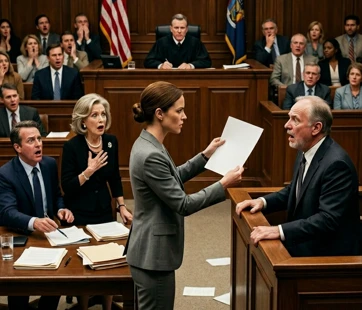
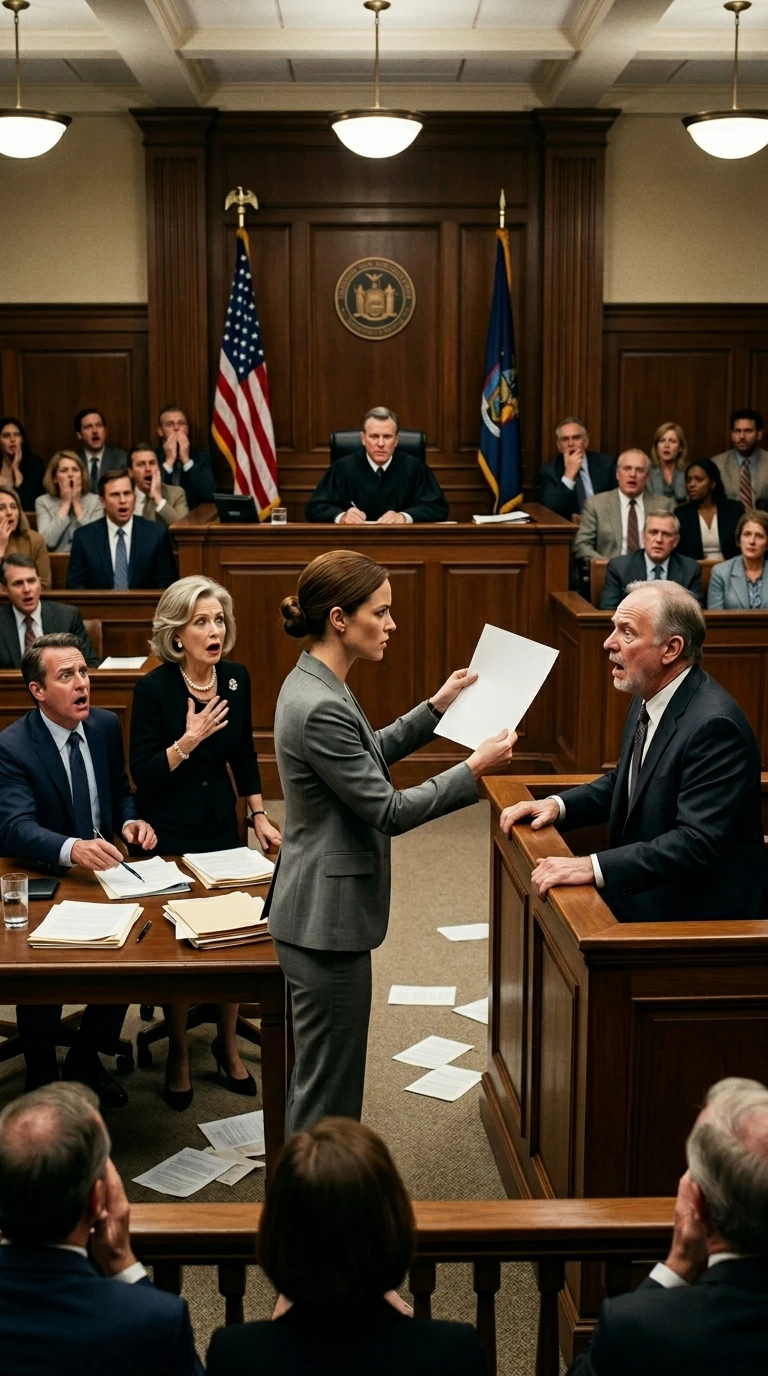
I never told my parents who I really was. After my grandmother left me $4.7 million, the same parents who had ignored me my entire life suddenly dragged me into court
The funeral for Grandma Evelyn felt less like a farewell to a cherished grandmother and more like a stage for my mother’s obsession with appearances.
Rain drizzled steadily over the cemetery, turning the ground into slippery mud. I stood quietly near the back beneath a plain black umbrella, wearing an old wool coat. At the front stood my mother, Patricia, wrapped in an expensive black fur coat, dabbing at dry eyes while subtly checking whether anyone important was watching.
Beside her was my father, Michael, repeatedly glancing at his watch as though he were counting the minutes until the reception. To both of them, Grandma Evelyn had been a burden while alive and an opportunity after death. Neither had visited her nursing home in years.
I missed her deeply. I missed our chess games, her stories, her humor, and the way she always defended me whenever my parents criticized my choices.
“She’s in a better place now,” my mother announced loudly as the casket was lowered.
I stayed silent. Any place away from them seemed better.
Two days later, we gathered in the office of Mr. Parker, the estate attorney.
My parents sat confidently together while I remained in a chair off to the side. To them, I was always the disappointing daughter—the one who moved away, chose a different path, and never fit their expectations.
Mr. Parker began reading the will.
“To my son Michael and his wife Patricia, I leave the contents of my storage unit, including family photo albums and my porcelain cat collection.”
My father frowned.
“That’s all?”
“That is your inheritance,” Mr. Parker replied.
My mother stared in disbelief.
“What about the investments? The property? The trust?”
Mr. Parker continued.
“To my granddaughter Claire Carter, I leave the remainder of my estate, including all property, investments, and liquid assets, totaling approximately four point seven million dollars.”
The room went silent.
Then chaos erupted.
“That’s impossible!” my father shouted. “She manipulated her!”
“I visited Grandma every weekend,” I said calmly. “I just didn’t advertise it online.”
My mother pointed at me.
“You took advantage of a vulnerable old woman!”
Mr. Parker immediately corrected her.
“Mrs. Carter was fully competent when she signed her will. The entire process was recorded.”
My father slammed a hand on the desk.
“We’re her children! Claire deserves nothing!”
I remained calm. I had spent years learning that arguing with them accomplished nothing.
Before leaving, my mother pointed a finger at me.
“We’ll take every penny back.”
Three days later, legal papers arrived at my apartment.
My parents were suing me for fraud, undue influence, and mental incapence.
I wasn’t worried.
I made coffee, opened my laptop, and created a folder titled Operation Inheritance.
When court day arrived, I showed up early wearing a simple gray suit and carrying only a thin folder.
My parents entered dressed as though they were attending a gala. Their attorney, Mr. Bennett, carried himself with complete confidence.
“You can still settle,” my father said smugly. “Give us eighty percent and keep the rest.”
“I’ll pass,” I replied.
Mr. Bennett smirked.
“You’re representing yourself? That’s a mistake.”
“We’ll see.”
Inside the courtroom, Judge Whitmore presided.
Mr. Bennett delivered a dramatic opening statement, portraying me as a manipulative, unemployed drifter who had exploited an elderly woman suffering from dementia.
When it was my turn, I simply stated that the will was valid and the burden of proof belonged to the plaintiffs.
The case proceeded.
My mother testified first, inventing stories about how close she had been to Grandma Evelyn.
My father followed, falsely claiming I had isolated Grandma and changed the locks to keep them away.
A paid medical expert speculated that Grandma had likely been susceptible to influence because of her age.
Each time I was invited to cross-examine, I declined.
The courtroom grew confused.
My parents assumed I was overwhelmed.
In reality, I was allowing every lie to become part of the official record.
Hours later, Mr. Bennett rested his case.
Judge Whitmore looked at me.
“Do you have anything at all?”
I stood and lifted my folder.
“One document, Your Honor.”
I handed it to the bailiff.
The judge opened it and began reading.
Her expression changed immediately.
“This is a certified Department of Defense service record?”
“Yes, Your Honor.”
She turned another page.
“You’re stationed at Fort Liberty?”
“Yes.”
“And your rank is Major?”
“Yes, Your Honor.”
My father laughed nervously.
“Major of what?”
The judge ignored him.
Then she looked up again.
“You’re with the Judge Advocate General’s Corps?”
“I am.”
The room fell silent.
I stood straighter.
“I am Major Claire Carter, Senior Trial Counsel for the United States Army JAG Corps. I’ve practiced law for seven years and prosecute serious criminal and fraud cases.”
Mr. Bennett dropped his pen.
My father looked stunned.
I continued.
“I’ve never been unemployed. The periods my parents claim I disappeared were overseas deployments. The reason they know so little about my career is because they never cared enough to ask.”
Judge Whitmore’s attention shifted sharply toward the plaintiffs.
I then pointed out that my father’s testimony about changing locks was false. Included in my file was an affidavit from the nursing home director proving the facility changed the locks after my father behaved aggressively.
I also submitted evidence of my income, eliminating any suggestion that I needed financial gain.
Then I requested permission to cross-examine my father.
Permission was granted.
My father returned to the witness stand looking far less confident.
“Mr. Carter,” I began, “you testified that this lawsuit is about preserving family legacy.”
“Yes.”
“Is it also true that you owe approximately two point one million dollars to casinos in Reno?”
The courtroom froze.
The judge overruled objections.
My father admitted he had significant debts.
I continued.
“Do you also have a second mortgage in default?”
He reluctantly acknowledged that as well.
Then I revealed the truth.
Grandma Evelyn knew about his gambling debts because collection agencies had contacted her.
“She left the estate to me because she wanted to protect it from you,” I said. “She knew it would disappear at gambling tables if you inherited it.”
My father finally broke.
“We needed the money,” he admitted quietly.
The truth was out.
The lawsuit had never been about fairness. It was about desperation.
Judge Whitmore ruled immediately.
“The plaintiff’s case is entirely without merit. The will remains valid.”
She dismissed the case permanently and ordered my parents to pay legal costs. She also referred the matter for investigation into perjury and attempted fraud.
My mother rushed toward me in tears.
“We’re your parents!”
I gently removed her hand from my arm.
“You chose money over your daughter.”
My father accused me of being cold.
I paused at the courtroom doors.
“No, Dad. That’s discipline.”
Six months later, I stood inside a newly renovated wing of the city’s Veterans’ Legal Aid Clinic.
A bronze plaque on the wall read:
The Grandma Evelyn Center for Justice.
I had kept enough of the inheritance to pay off my student loans and buy a modest home near base. Nearly four million dollars had been donated to support elderly veterans and spouses who were victims of fraud and family abuse.
It felt like the perfect tribute.
My parents had tried to exploit an elderly woman.
Now her legacy would protect others from people like them.
My phone rang.
Blocked number.
I knew exactly who it was.
My parents had lost their home. My father had avoided jail through a plea agreement, while my mother was living with relatives in Michigan. They called regularly asking for money.
I watched a law student helping an elderly veteran complete paperwork while tears filled the man’s eyes with gratitude.
Then I looked at the phone and pressed Block Caller.
Grandma Evelyn never left me her fortune because I manipulated her.
She left it because she trusted me.
She knew I would use it wisely. She knew I would turn it into something meaningful.
As I left the clinic and stepped into the afternoon sun, a black sedan waited at the curb.
“Airport, Major?” the driver asked.
“Yes.”
A new fraud case awaited me in Wiesbaden, and I was lead prosecutor.
I opened my laptop as the car pulled onto the highway.
The family battle was finally over.
The work that truly mattered was waiting.
I logged in and got started.